
Updated September 2026 | Johnny Wu, Frontier industry perspective
The 11th Edition of the Manual on Uniform Traffic Control Devices (MUTCD) is a useful starting point for a traffic signal specification. It does not, by itself, tell a buyer which LED module to order. A working purchase also needs the applicable state standard, the intersection design, a suitable product specification, the agency’s acceptance process, and a complete model number.
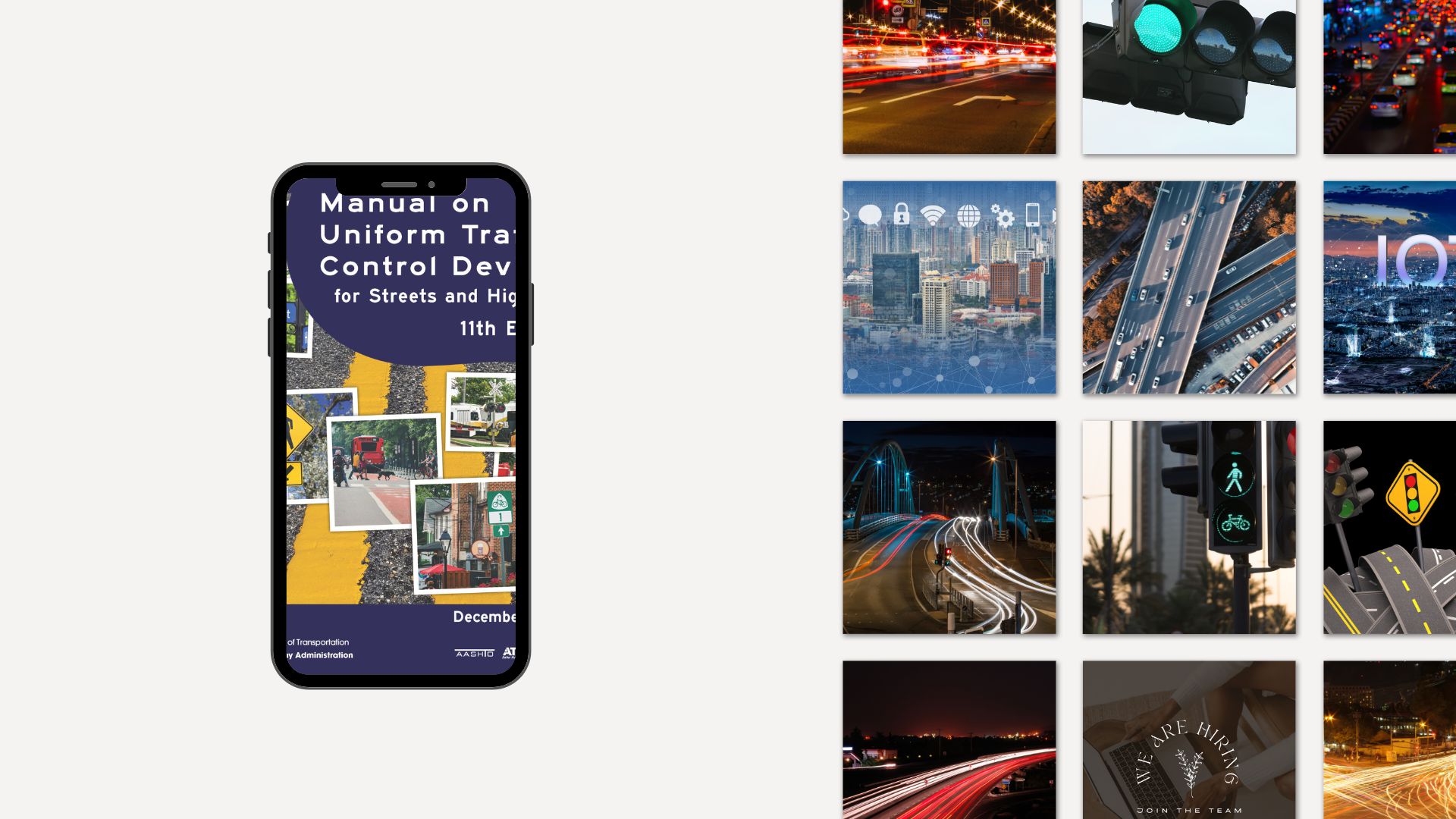
That distinction matters more now because the current official FHWA publication is the 11th Edition with Revision 1, dated December 2025. FHWA states that the revision became effective on March 5, 2026 and addresses technical corrections. Older links to the original December 2023 PDF are historical sources, not the current official publication (Federal Highway Administration [FHWA], 2026a, 2026b). A project team should check the version and its state or local implementation before reusing an old schedule or boilerplate.
What the MUTCD does—and what it does not decide
The MUTCD establishes national standards for traffic control devices on roads open to public travel. Part 4 concerns highway traffic signals, including vehicle and pedestrian indications. It addresses the meaning, application, arrangement, and operation of devices in a traffic-control system. The agency and its engineer still decide how a particular location should be designed under the applicable standard and project documents (FHWA, 2026a).
A product specification answers a different question. The Institute of Transportation Engineers (ITE) publishes separate specifications for LED circular, arrow, and pedestrian signal indications. Those documents address technical performance and testing of the relevant products. An agency material list or project acceptance decision is a further layer. A manufacturer should not use “MUTCD compliant” as a blanket substitute for all of these checks (Institute of Transportation Engineers [ITE], n.d.).
| Decision layer | Primary question | Evidence to check |
|---|---|---|
| Traffic-control design | What indication and operation belong at this site? | Current MUTCD, applicable state standard, approved plans |
| LED module performance | Does the proposed model meet the specified product requirements? | Applicable ITE specification, controlled product data, test evidence |
| Agency acceptance | Is this exact model acceptable to the owner? | Current approved list or project-specific review |
| Physical and electrical fit | Will it fit and operate in the installed assembly? | Dimensions, connection, rated input, installation instructions |
| Purchase and delivery | Does the supplied item match the approved submittal? | Full ordering code, revision, quotation and receiving record |
This table is a purchasing workflow, not a claim that one document certifies an entire intersection. Each layer has a different owner and a different failure mode. A technically suitable module can still be the wrong item for a particular housing or an agency list. Conversely, a listed product does not establish that an intersection’s timing or pedestrian operation has been designed correctly.
Start with the current edition and the state standard
FHWA adopted the original 11th Edition through a final rule effective January 18, 2024. States had a two-year period to adopt the national manual, adopt it with a state supplement, or maintain a state manual in substantial conformance. Revision 1 was subsequently adopted with a March 5, 2026 effective date. For a September 2026 project, the current FHWA PDF and the responsible agency’s current instructions deserve a fresh check; the adoption status and local specification should never be guessed from an old blog post (FHWA, 2026b; FHWA, n.d.).
In practice, I would record three items at the start of a quotation: the jurisdiction, the governing standard or plan version supplied by the customer, and the exact application. A municipality purchasing a replacement circular module may have a very different review path from an agency converting a left-turn operation or rebuilding a pedestrian crossing. The same product family name is not enough to carry a specification from one project to another.
The FHWA state information page describes the national-versus-state framework. For an actual bid, the agency’s current traffic engineering and procurement documents are the controlling project sources. If an approval list is dated, keep its revision date with the submittal. If the project refers to an older manual, ask the owner or engineer to reconcile that reference rather than silently substituting a newer clause.
Vehicle signals: define the indication before selecting the module
A circular indication, a directional arrow, and a special application have different jobs. A useful schedule records the display color and symbol, nominal size, optical requirements, electrical input, housing or connector, and any environmental or agency-specific condition. It should identify whether the work replaces only an LED module or also changes the signal head, wiring, controller, or operation. This is the point where design intent becomes an orderable item.
For a replacement project, a photograph of the installed face helps, but the label and full part number are more decisive. Two products that appear similar from the street may differ in voltage, optical configuration, connector, or agency acceptance. In a legacy inventory, suffixes can carry purchasing information. Our Dialight-to-Frontier replacement guide explains how to preserve those details before selecting a current candidate.
Frontier’s Ball LED module and Arrow LED module pages provide product-family starting points. They are not interchangeable simply because both are signal lights. For each candidate, compare the controlled specification and actual ordering code with the project schedule and agency acceptance record. Request clarification where the relevant configuration or rating is absent.
Flashing yellow arrows require an operating plan
A flashing yellow arrow is a signal indication within a defined intersection operation. The procurement question is not just “which yellow arrow module?” The project engineer must establish the movement, opposing traffic and pedestrian conflicts, signal-face arrangement, controller and monitor behavior, and commissioning tests under the applicable design. Hardware selection follows that plan.
In my view, this distinction is where a supplier can be especially helpful without claiming to design the intersection. A clear product record can identify the indication, electrical rating, dimensions, ordering code, and supporting documentation. The agency and engineer can then decide whether the proposed item fits the approved operation. Our flashing yellow arrow procurement guide includes a field-to-purchase decision table for that handoff.
A buyer should be cautious about a quotation that treats a conventional arrow and a special display configuration as equivalent without documenting how the face operates. Installation and acceptance should test the intended states, including pedestrian interactions, rather than treating an illuminated lamp as the whole commissioning result.
Pedestrian displays, countdown, and APS are separate functions
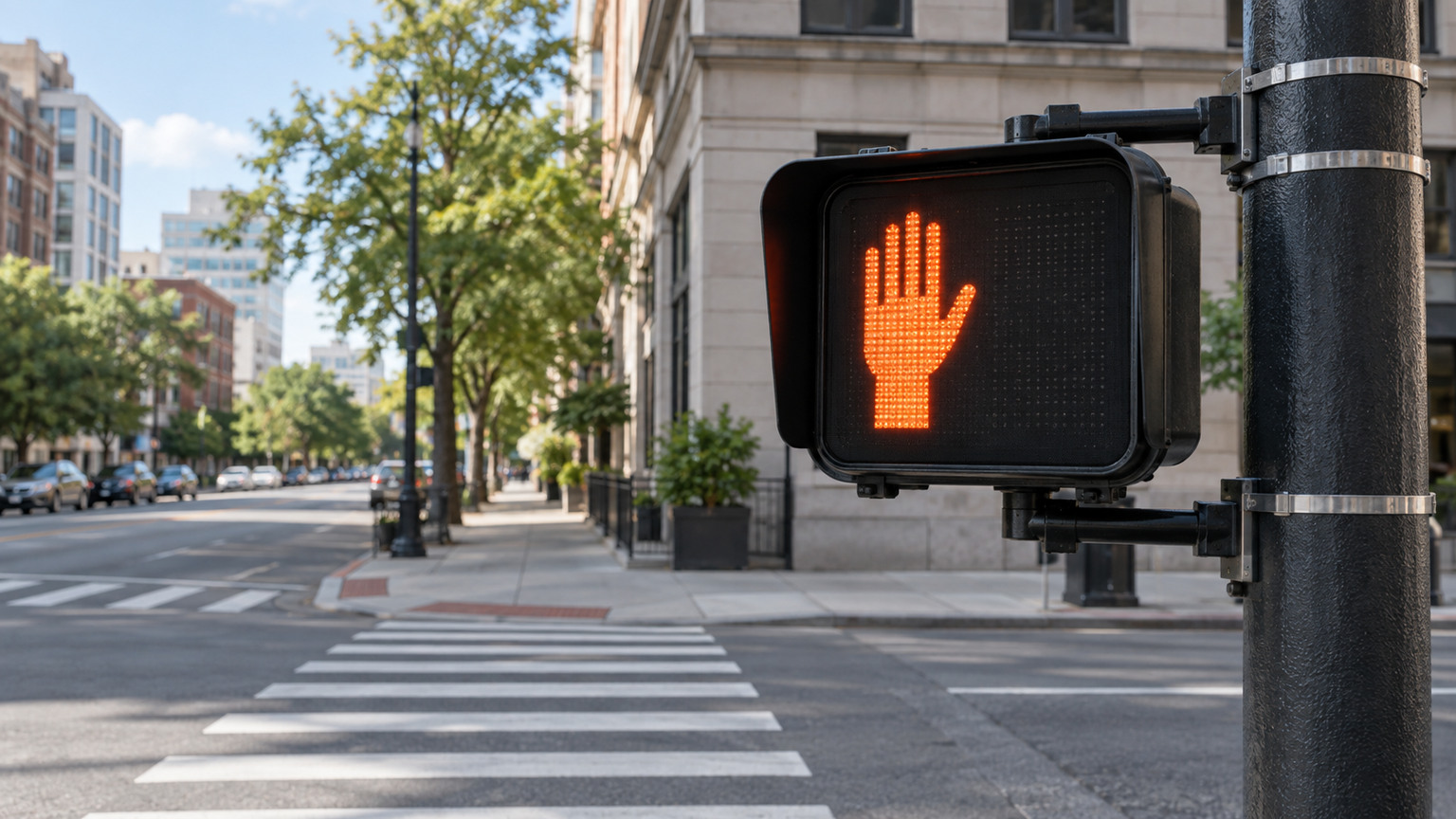
A pedestrian signal can communicate a walking-person or upraised-hand indication. A countdown display communicates remaining time under a programmed crossing sequence. Accessible pedestrian signals (APS) provide nonvisual information such as audible and vibrotactile cues through associated equipment. These functions work together at a crossing, but an LED visual module is not an APS system and a countdown display does not establish accessibility on its own.
The older version of this article overstated the rule by describing countdown displays as universally mandatory and locating APS in the wrong part of the manual. A better procurement question is which functions the approved design requires at this crossing, how they interact with timing and pushbuttons, and which exact hardware the owner accepts. The current MUTCD and local project requirements should be checked before making a universal claim.
For visual module choice, the 12 × 12 versus 16 × 18 comparison distinguishes symbol, countdown, and combination displays. Our countdown and APS planning guide lays out the broader crossing scope. Frontier’s pedestrian signal product family can then be reviewed against the approved visual display schedule. The engineer and accessibility specialist should determine the APS, timing, and field-testing requirements.
Build a submittal that a reviewer can actually verify
For an LED signal module, a concise submittal should begin with the full proposed model number and the exact indication. Then it should point to the controlled specification, relevant ITE test or certification evidence, current agency list entry where one is required, and the installation information needed for the existing assembly. If the project also has domestic-content clauses, keep that evidence separate from traffic-signal performance and agency acceptance.
Part numbers must match across the quote, specification, approved list, purchase order, delivery label, and receiving record. A family-level brochure may explain the offering but cannot resolve a suffix-level mismatch. The date of the list and the scope of a third-party directory also matter. Our five-question approval guide separates technical specification, testing, agency listing, project acceptance, and procurement requirements.
A useful review package also names the person responsible for substitutions. If the owner approves one model and a distributor ships another, even a seemingly small change should trigger a documented comparison. That discipline reduces delays at receiving and makes later maintenance decisions easier. Product selection is strongest when the record remains intelligible to a different engineer several years later.
Three scenarios that should not share the same answer
Like-for-like module replacement. The installed indication and assembly remain in place. The practical work is to record the complete legacy part, verify mechanical and electrical fit, compare current performance evidence, and confirm agency acceptance for the proposed model. The project may still require a field check; matching color and nominal size alone is not sufficient.
Left-turn operation change. The agency plans a different movement or flashing arrow operation. The governing question is the approved traffic-control design, followed by face arrangement, controller compatibility, module schedule, and commissioning. A module catalog cannot decide whether the operation is appropriate for the site.
Pedestrian crossing upgrade. The owner is adding or revising visual countdown, APS, timing, or accessible features. The team should define each user function, installation interface, and test. A visual LED display can be one component of the work without representing the entire crossing solution. These differences affect budget, approvals, and who signs off on the result.
Across all three, I recommend a short field-to-document checklist: what exists, what changes, what standard and plan govern, what exact model is proposed, which evidence supports it, and who approves the substitution. This is more useful to a buyer than a broad assurance that a brand is “MUTCD compliant.”
What Frontier buyers should do next
Begin with the approved intersection or crossing scope, not a product photo. For a direct replacement, send the installed label, indication, size, voltage, and agency requirement. For a redesign, provide the engineer’s signal-face schedule and operating plan. Frontier can help identify relevant signal module families and product resources for a documented comparison; final selection and acceptance should follow the project authority’s process.
If a specification still cites the December 2023 original as the “current” MUTCD, first review the FHWA Revision 1 page and ask how the owner is applying the current edition. If the request says only “ITE certified” or “DOT approved,” ask which product specification, directory, list, and model entry the reviewer expects. Those questions prevent a generic claim from becoming a purchasing assumption.
For an exact product match or a submittal question, contact the Frontier team with the model and project context. A useful response should be traceable to the proposed item and controlled documentation.
Frequently asked questions
Does MUTCD compliance certify an LED traffic signal module?
No. The MUTCD governs traffic-control-device application and operation. Product performance, third-party verification, agency listing, and project acceptance are separate checks. A buyer should ask which evidence applies to the exact model.
Is the December 2023 11th Edition still the current FHWA publication?
FHWA identifies the 11th Edition with Revision 1, dated December 2025 and effective March 5, 2026, as the current official publication. Check the state standard and project documents as well.
Does a visual countdown module provide APS?
No. Countdown and accessible pedestrian signal functions are different parts of the crossing design. Confirm the visual display, nonvisual information, timing, and field tests separately.
Can an approved brand name replace a model-level review?
No. Use the full ordering code, current controlled specification, applicable agency entry, and delivery record. A brand or family name alone can hide important configuration differences.
References
Federal Highway Administration. (2026a). 11th Edition of the MUTCD with Revision 1, December 2025. U.S. Department of Transportation. https://mutcd.fhwa.dot.gov/kno_11th_Editionr1.htm
Federal Highway Administration. (2026b). Manual on Uniform Traffic Control Devices for Streets and Highways. U.S. Department of Transportation. https://mutcd.fhwa.dot.gov/
Federal Highway Administration. (n.d.). MUTCDs & traffic control devices information by state. U.S. Department of Transportation. https://mutcd.fhwa.dot.gov/resources/state_info/
Institute of Transportation Engineers. (n.d.). Specifications. https://www.ite.org/technical-resources/topics/standards/specifications/