

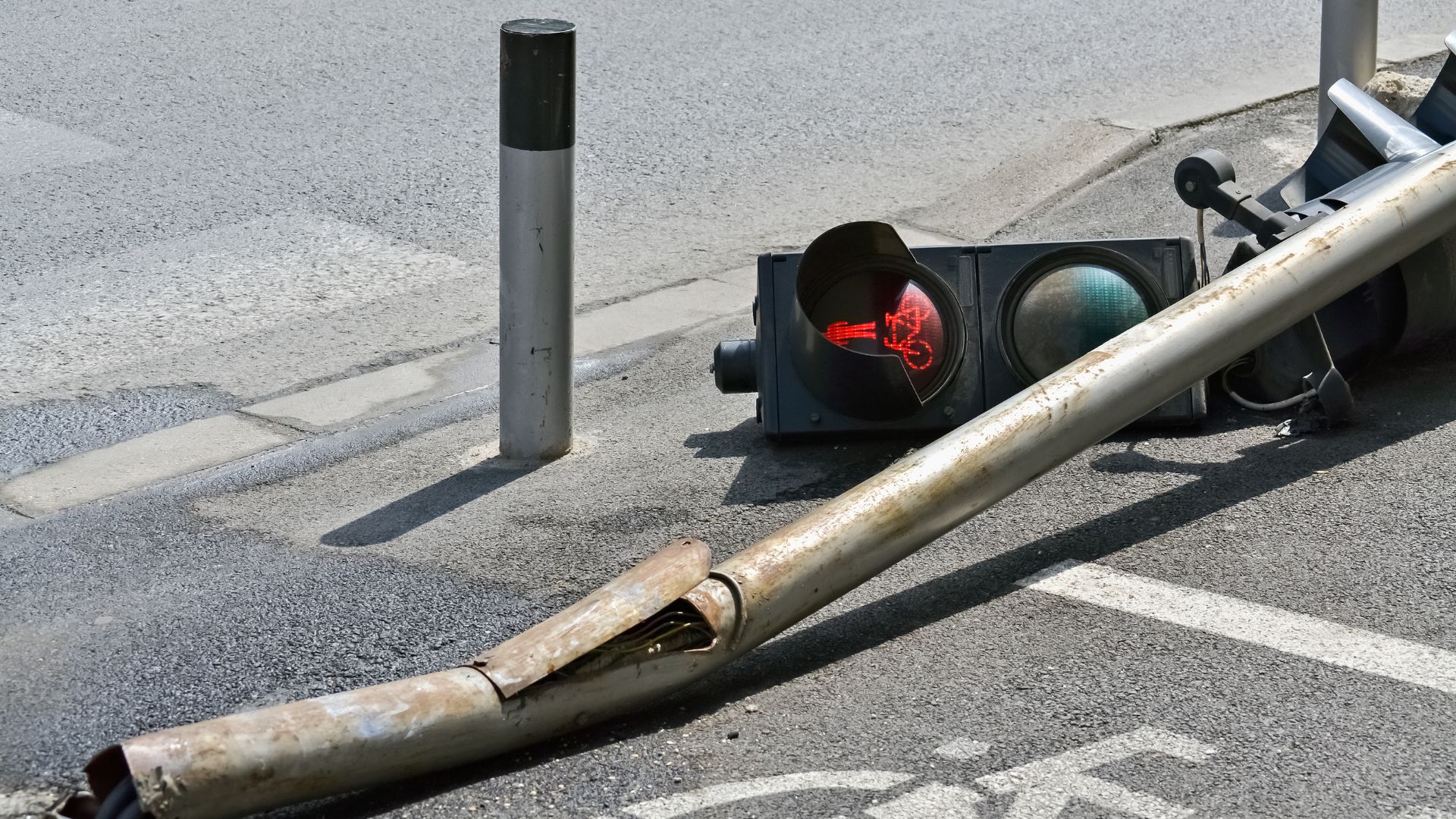
Effective Projected Area (EPA) is a critical metric in structural engineering, especially when designing and installing outdoor lighting fixtures like flood lights, traffic signals, and streetlights. In simple terms, EPA represents the surface area of an object that is exposed to wind, adjusted for shape and aerodynamic properties. Unlike flat frontal area, EPA considers how wind interacts with the fixture’s shape, including drag and gust factors.
EPA Formula:
EPA = Projected Area × Drag Coefficient × Gust Factor
For example, a rectangular flood light with a flat front will have a higher EPA than an aerodynamic signal head with cutouts, even if their dimensions are similar.
The higher the EPA, the more wind force is applied to the pole or mounting structure.
Why Is EPA a Vital Engineering Metric?
EPA is essential because it directly affects wind loading calculations for outdoor installations. Improperly accounting for EPA can result in underbuilt poles, bracket failures, or even complete system collapse in high-wind conditions. Engineering teams, municipalities, and DOTs use EPA data to ensure:
- Structural Safety: Prevents pole failure under design wind speeds.
- Compliance: Meets AASHTO LTS-6 and local building codes.
- Cost Efficiency: Optimizes material selection and mounting configurations.
- Performance Longevity: Ensures fixture stability over years of exposure.
EPA isn’t just an engineering abstraction—it determines the real-world durability of lighting systems installed in streets, sports arenas, ports, and more.
How Is EPA Calculated for Lighting Fixtures?
To calculate EPA accurately, you need three components:
- Frontal Area: The total visible area of the lighting fixture from the direction of the wind.
- Drag Coefficient (Cd): A value typically ranging from 1.1 to 1.3 for flat surfaces, lower for aerodynamic shapes.
- Gust Factor (G): An adjustment for wind turbulence, commonly around 1.3 in most outdoor settings.
Example Calculation:
- Fixture: 16″ x 12″ flood light = 1.33 ft² frontal area
- Cd = 1.2 (flat panel)
- G = 1.3
EPA = 1.33 × 1.2 × 1.3 = 2.07 ft²
Tools like CFD simulation, wind tunnel testing, or 3D CAD projection are used to verify complex shapes.
How Does Wind Load Interact with EPA?
AASHTO LTS-6 Guidelines Overview
AASHTO LTS-6 (“LRFD Specifications for Structural Supports for Highway Signs, Luminaires, and Traffic Signals”) sets the national standard for how EPA should be incorporated into structural design for lighting systems.
Key elements of the LTS-6 guideline include:
- Wind Map Zones: Defines wind speeds across U.S. regions (e.g., 90 mph to 160+ mph zones).
- Importance Factors: Multiplier based on the type of roadway or infrastructure (critical vs. non-critical).
- Exposure Categories: Adjusts for terrain—urban, open field, or coastal.
- Height Adjustment Factors: Wind pressure increases with mounting height, often above 30 ft.
- Design Wind Speed Return Periods: Higher frequencies used for essential service roads or airports.
LTS-6 requires that total EPA be used in conjunction with these factors to design structurally safe poles and mounting systems. Ignoring these adjustments can lead to serious underestimation of wind load forces.
Lighting manufacturers and engineers should always cross-reference their fixture’s EPA data with the applicable LTS-6 region and structural class.
Wind load is the force exerted on a fixture due to wind speed. The total wind force (F) can be calculated using:
F = qz × G × Cf × A
Where:
qz= wind velocity pressure (dependent on height and region)G= gust effect factorCf= force coefficient (shape-related)A= effective projected area (EPA)
Example: Let’s assume:
- Wind speed: 110 mph
- Height above ground: 30 ft
- qz (velocity pressure) ≈ 25 psf (from AASHTO wind charts)
- G = 1.3
- Cf = 1.2 (typical for rectangular flat fixtures)
- A = 2.07 ft² (EPA from earlier example)
F = 25 × 1.3 × 1.2 × 2.07 ≈ 80.91 lbs of force
This means the wind applies ~81 lbs of pressure on the mounting point. This single calculation underscores the importance of matching EPA to pole and bracket ratings. AASHTO LTS-6 provides specific wind zone maps to aid these calculations and ensure proper design.
Common Applications of EPA in Lighting Design
| Fixture Type | Typical EPA Range (ft²) | Notes |
|---|---|---|
| 8″ Traffic Signal | 0.14–0.18 | Used on minor urban roads |
| 12″ Signal Head | 0.23–0.28 | Requires stronger mounting |
| Flood Light 150W | 0.25–0.35 | Wide angle increases EPA |
| Backplate | 0.50–1.5+ | Often ignored in total load |
These EPA values inform what size poles or brackets are needed. Neglecting even a small component like a backplate can lead to safety hazards.
EPA and Light Pole Selection
Light poles must be rated not only for weight but also for wind pressure, which is governed by EPA. Factors affected by EPA include:
- Pole height and wall thickness
- Foundation requirements (depth, diameter)
- Material selection (steel vs. aluminum)
Poles used in high-wind zones (e.g., coastal areas or hurricane-prone states) must adhere to stricter guidelines. Always reference AASHTO LTS-6 or the IESNA Handbook for structural requirements.
Is EPA Enough for Safe Installation?
While EPA is critical, it’s not the only factor in fixture safety. Other considerations include:
- Combined EPA: Sum of fixture, bracket, arm, and backplate
- Vibration resistance: Especially for overpasses or bridges
- Corrosion protection: Galvanized or powder-coated surfaces
- Seismic zone compatibility
Real-World Case: A city pole failed during a storm due to underreporting the EPA of its visor and sign bracket. Total EPA exceeded design specs by 40%.
Real-World Example – Calculating EPA
Fixture Specs:
- Type: LED flood light
- Size: 20″ x 14″
- Area: 1.94 ft²
- Cd = 1.15
- G = 1.3
EPA = 1.94 × 1.15 × 1.3 = 2.90 ft²
Visual Diagram Suggestion: A labeled drawing showing dimensions, drag direction, and wind vectors.
Do Wind Farms and Special Projects Use EPA?
Yes. EPA is essential in:
- Telecom towers
- Wind turbines
- Airport beacon poles
- Camera surveillance poles
These installations often face extreme environmental loads and use EPA to size their foundations and guy-wire anchors.
## Why Should You Pay Attention to EPA Ratings?
If you’re new to the lighting or infrastructure industry, think of Effective Projected Area (EPA) as a way to understand how much wind pressure your lighting equipment will face. Every time wind hits a flood light, traffic signal, or backplate, it exerts force. The higher the EPA, the more force the pole must withstand. Failing to consider this can have serious consequences:
- Pole collapse: The entire structure could bend or snap under pressure.
- Electrical failures: Damage from falling poles can disrupt power supply and cause outages.
- Insurance liability: Improper designs that ignore EPA can void coverage or expose your organization to lawsuits.
- Warranty voids: Most manufacturers require EPA-compliant installation for product warranties to remain valid.
On the other hand, following EPA guidelines brings major benefits:
- AASHTO compliance: Ensures you meet national wind load standards for public safety.
- UL/ETL structural verification: Verifies that your system meets third-party safety testing requirements.
- Manufacturer transparency: Trusted brands, like Frontier by LEOTEK, provide EPA data so you can design and install with confidence.
In simple terms, a lower EPA rating means you can use smaller, lighter poles and save money—as long as it’s verified. Choosing EPA-rated fixtures isn’t just about performance; it’s about long-term safety and liability protection.
## Best Practices for Managing EPA in Your Lighting Projects
- Request EPA spec sheets from manufacturers
- Include ALL components in total EPA
- Use design tools or wind load calculators
- Match EPA to local wind zones
- Collaborate with structural engineers
How to Use AI to Quickly Calculate EPA
Modern engineering teams are beginning to integrate AI tools into their EPA workflows. Here’s how you can get started:
- AI-powered CAD analysis: Use AI-enhanced 3D modeling software to automatically project wind-facing surface areas and calculate drag coefficients.
- Automated EPA estimators: Platforms trained on thousands of fixture profiles can instantly predict EPA values based on dimensions, mounting angle, and shape.
- Cloud-based EPA calculators: Input basic specs (e.g., size, shape, mounting orientation) and let the AI cross-reference local wind codes to produce compliant results.
This not only saves engineering hours but helps reduce human error—especially in high-volume municipal bidding or retrofit projects. Some manufacturers are beginning to offer built-in AI tools in their online spec configurators.
Call to Action
Looking for EPA-Tested LED Modules or Flood Lights?
Frontier by LEOTEK delivers fully AASHTO-compliant LED lighting products with verified EPA values for every configuration.
➔ Explore Our Traffic & Flood Lighting Solutions
References
- American Association of State Highway and Transportation Officials. (2023). LRFD Specifications for Structural Supports for Highway Signs, Luminaires, and Traffic Signals (LTS-6).
- Lumenpulse. (2023). EPA and the ABCs of Wind Safety. https://www.lumenpulse.com/knowledge
- Access Fixtures. (2024). How Wind, Weight & Effective Projected Area Affect Light Pole Selection. https://www.accessfixtures.com
- AGC Lighting. (2023). What Is Effective Projected Area (EPA) of Flood Light?. https://www.agcled.com
- Leotek Electronics USA. (2024). EPA White Paper for LED Fixtures. https://www.leotek.com