

“Does this signal have to meet BABA?” is often the second question. The first is which federal funding and contract provisions attach to the project. FHWA says the manufactured-product requirements in its Buy America rule and in the Build America, Buy America Act (BABA) are generally similar, but their application can differ. That distinction matters when an agency buys traffic-signal equipment, even before it asks a manufacturer for paperwork.
Start with the funding instrument and project scope
In Q2 of its manufactured-products guidance, FHWA explains that BABA applies to infrastructure projects in the United States, including construction, alteration, maintenance, or repair of infrastructure. FHWA’s Buy America requirements apply to all projects funded with Title 23 funds, including some vehicle or equipment purchases under Federal-aid highway programs that might not generally be treated as infrastructure projects. That is why a generic “BABA applies / does not apply” answer based only on the product name can mislead.
The procurement officer should identify the federal award, administering agency, recipient, project obligation date, contract clauses, and whether the equipment is permanently incorporated. A state-funded purchase, a Title 23-funded project, and another agency’s infrastructure award can have different controlling documents. The applicable owner or grant administrator should resolve ambiguous funding combinations and any waiver.
What the FHWA manufactured-products phase actually asks
For projects obligated on or after October 1, 2025, FHWA Q4 describes domestic final assembly for manufactured products permanently incorporated in the project. For projects obligated on or after October 1, 2026, it also describes a requirement that the cost of U.S. components be greater than 55 percent of total component cost. This is an obligation-date rule, not simply an invoice-date or installation-date switch. The preceding transition, projects obligated March 20 through September 30, 2025, is addressed in the same Q&A. Steel and iron products follow a different analysis.
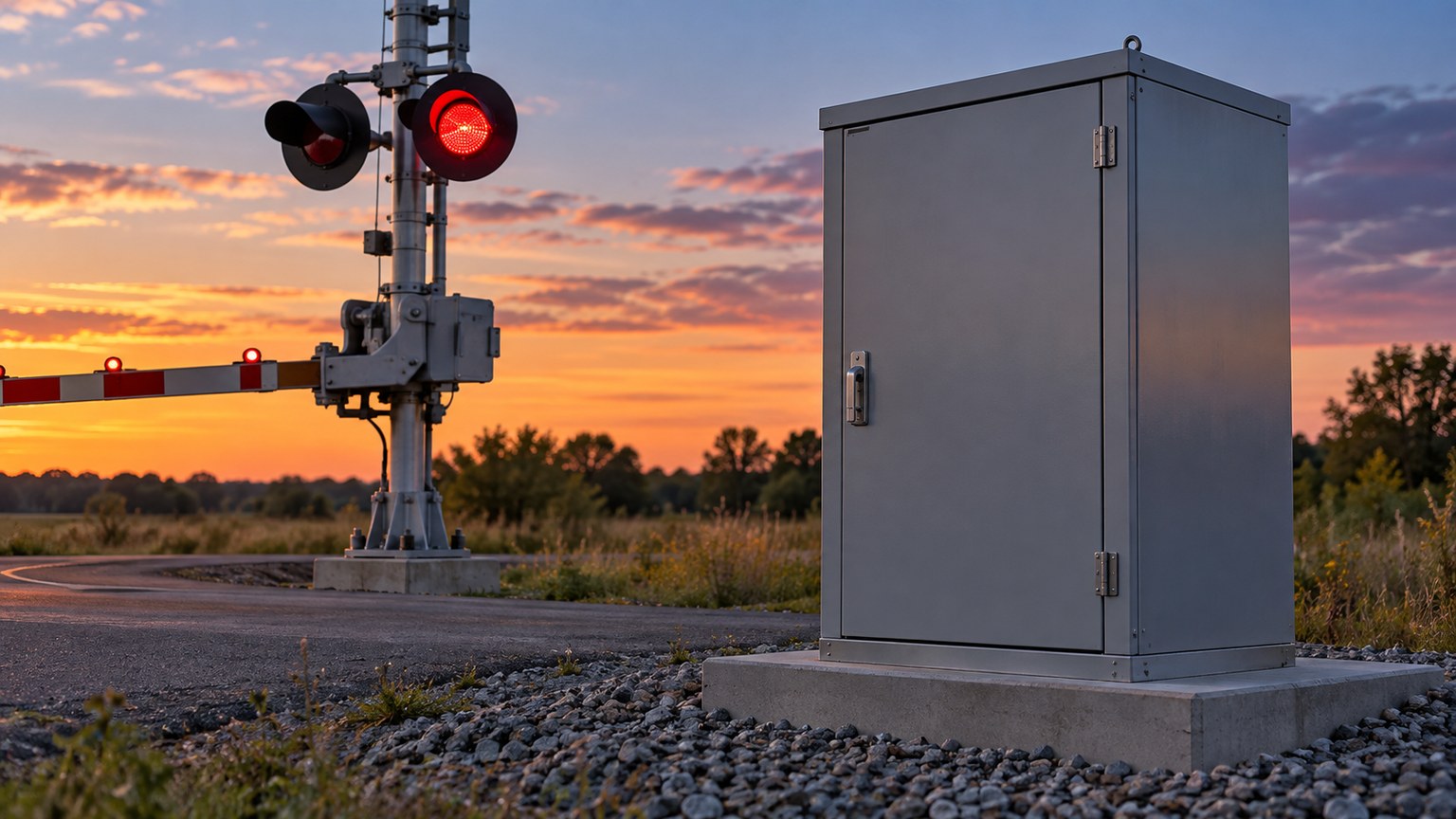
FHWA’s Q7 adds a specific point for certain intelligent transportation systems and electronic hardware installed in the right of way: a predominantly iron or steel cabinet or other enclosure may need to satisfy the iron and steel requirements even when the overall specified ITS product is a manufactured product. Do not generalize this to every small LED module; classify the delivered article and inspect the specific rule.
A useful five-question intake for traffic signal buyers
- Who supplied the federal funds? Capture the award and program, not only the agency purchasing the product.
- What is the project? Record its infrastructure scope and whether Title 23 funds are involved.
- When were funds obligated? Use the formal project obligation date for the FHWA phase, then check the award and contract language.
- What arrives at the work site? Distinguish a complete signal, separate head and lens, standalone module, or qualifying kit. See our head, lens, and kit classification guide.
- Which evidence and exceptions apply? Request the specific manufacturer’s production and component documentation, and have the recipient confirm any waiver or exception in writing.
Our separate 2026 Buy America traffic signal procurement guide covers the document package and phase dates in more detail. Agency approval, ITE performance evidence, and third-party listing are separate questions; neither substitutes for domestic-content evidence.
What to ask a prospective module supplier
Send the exact product number, variants, intended delivered configuration, project obligation date, and contract provisions. Ask which entity manufactures the supplied article, where the final manufacturing step occurs, how relevant component costs are documented if required, and whether the statement covers all submitted variants. Keep a change-control process if a later substitution changes the bill of materials or kit contents. A sales statement that says only “Made in USA” does not, on its own, answer all of these questions.
Frequently asked questions
Are BABA and FHWA Buy America interchangeable names?
No. FHWA describes generally similar manufactured-product standards but different reach in some cases. Use the actual award and contract provisions to identify which applies.
Does the October 2026 phase apply to an earlier-obligated FHWA project?
FHWA’s Q4 ties that phase to projects obligated on or after October 1, 2026. Confirm the formal obligation and project conditions with the recipient rather than inferring from a purchase order’s date.
Does ITE certification prove domestic content?
No. Performance, listing, agency approval, and domestic-content rules ask different questions and require different records.
Sources and scope
Primary source: FHWA, Manufactured Products Final Rule Q&A, especially Q1, Q2, Q4, Q7 and Q9–Q11 (accessed September 2026). The Q&A is explanatory; the funding award, regulations, contract, recipient and agency decisions control individual projects. This page does not determine a specific LEOTEK or Frontier model’s compliance.