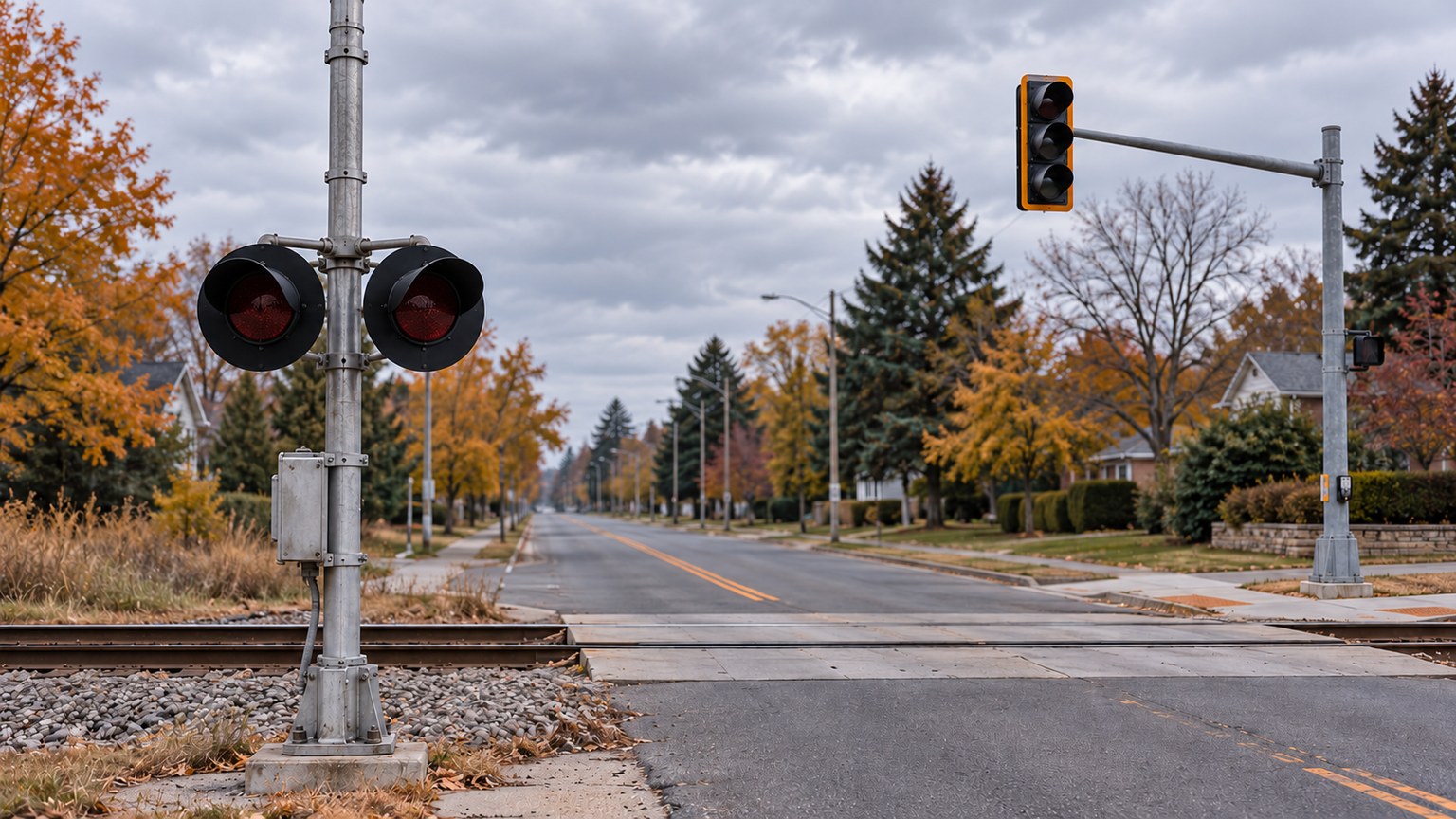

A rail crossing warning light malfunction is a system-level safety report, not a reason to order a replacement lamp from a photograph. A crossing may fail to warn for an approaching train, give only part of its intended warning, or activate when no train is approaching. Federal Railroad Administration (FRA) rules distinguish those conditions and assign the responsible railroad a prompt investigation and protective response after a credible report.
This guide is for railroad signal, maintenance, and purchasing teams organizing the handoff from a reported symptom to an authorized repair. It summarizes selected U.S. federal requirements; the railroad’s operating rules, approved crossing design, and applicable jurisdictional requirements govern the actual response. Do not use a blog article as an instruction to enter a track area or operate a warning system.
First identify the report, crossing, and responsible railroad
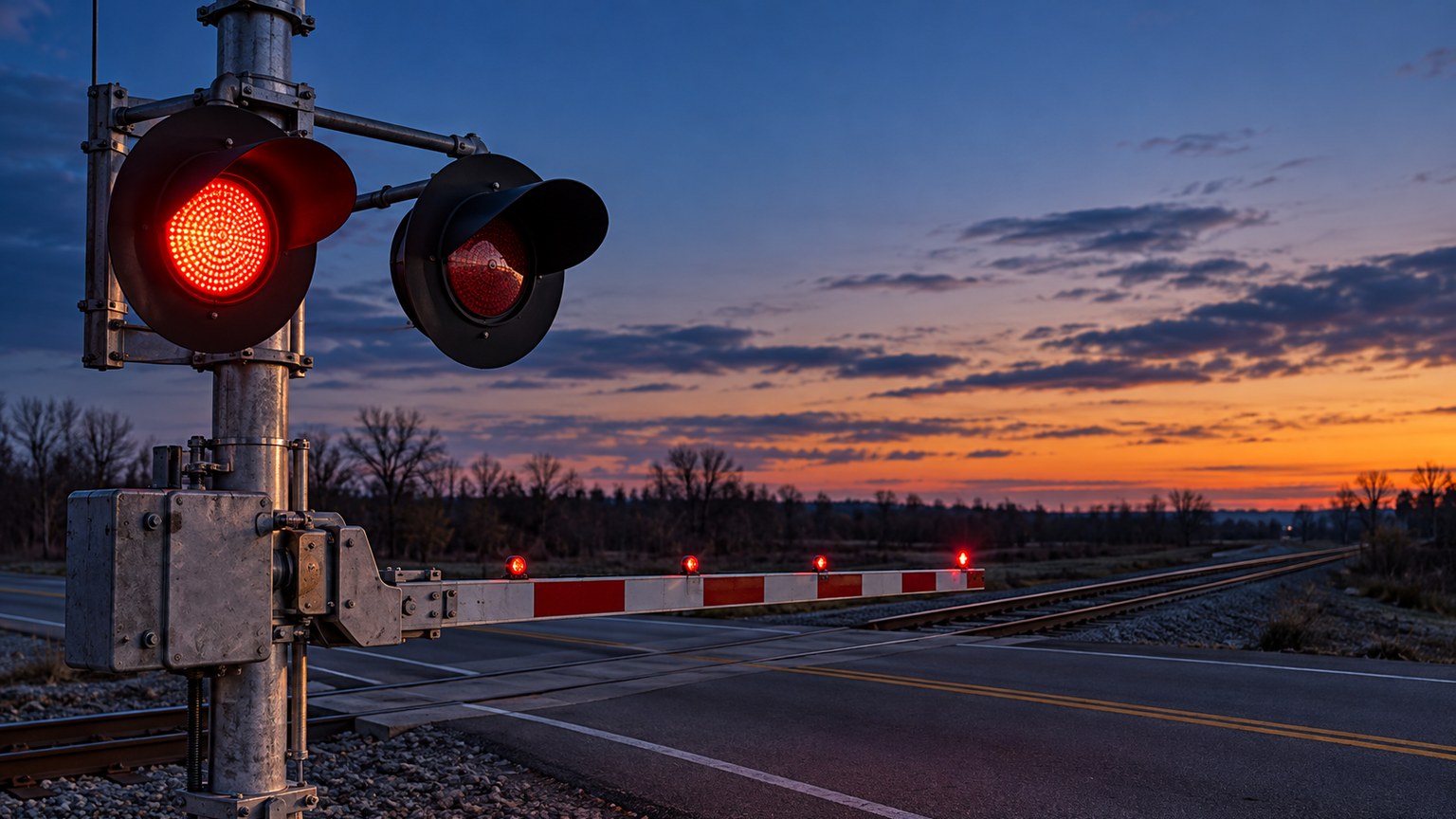
49 CFR § 234.5 defines a “credible report of warning system malfunction” in specific terms: it identifies the crossing and gives specific malfunction information from a railroad employee, law enforcement officer, highway traffic official, or other public-agency employee acting officially. A single still image with one lamp lit and the other dark is insufficient to classify a defect, because a pair of crossing lights is designed to flash alternately. The observation needs time, location, approach, and operating context.
The railroad with maintenance responsibility must promptly investigate a credible report and determine the nature of the malfunction under § 234.103. Until correction is complete, the regulation calls for alternative warning under the provision that applies to the diagnosed condition. Signal teams should escalate through their railroad’s established emergency and dispatch procedures, rather than wait for a product quotation.
Three regulatory categories are not interchangeable
| Condition in 49 CFR Part 234 | What the definition addresses | Response reference |
|---|---|---|
| Activation failure | The active system fails to provide the required indication of an approaching or occupying train, subject to the details in § 234.5. | § 234.105 |
| Partial activation | The warning activates, but the full intended warning is absent in one of the conditions specified by § 234.5. | § 234.106, which refers to § 234.107 |
| False activation | The warning activates because of a condition requiring correction or repair when it should not be warning of a train. | § 234.107 |
These are summaries, not a substitute for the full definitions or response provisions. The responsible railroad determines the classification and protection. Do not infer that one dark lamp, a raised gate, or a prolonged activation always has the same regulatory meaning at every crossing.
For an activation failure, § 234.105 specifies notifications and alternative means of warning highway users, with train movement governed by the precise protection in place. Partial activation follows the false-activation response under § 234.106. The distinctions matter to operations; a product seller should never prescribe an improvised flagging or train-speed procedure.
Separate the immediate protection from component diagnosis
Once the authorized railroad team has handled protection and investigated the symptom, its diagnostic record should connect the observed behavior to the exact crossing and equipment. Useful handoff fields include the DOT/AAR crossing inventory number; date and time; affected road approach and lamp position; observed activation sequence; gate and audible-device behavior where present; supply or control observations made by qualified personnel; photographs or video with context; and the approved drawing or equipment identity. This is a documentation checklist, not a universal test script.
A visibility complaint can also originate in dirt, damage, aim, or an obstructed approach even when the lamp operates. § 234.253 calls for monthly inspection of each flashing-light unit for proper visibility and dirt or damage to roundels and reflectors. It also specifies inspection for alignment and flash frequency when installed and at least every 12 months, and testing of lamp voltage at installation and at least every 12 months. The related § 234.257 calls for a system operation test when placed in service, at least monthly, and when modified or disarranged. Our flashing-light visibility review treats the separate question of how the light is seen from roadway approaches.
If a report also involves a nearby highway traffic signal or vehicles queued toward the tracks, the railroad and highway agency should review their combined operation. See the railroad crossing traffic signal preemption checklist for the coordination and testing questions.
What to send with a replacement inquiry
If qualified diagnosis points to a light unit, send Frontier the existing manufacturer’s full model and revision, photographs of the physical interface, approved voltage and wiring information, mounting and lens configuration, sidelight requirement if any, and the railroad’s specified optical and acceptance criteria. Request the current controlled drawing, installation instructions, and model-level electrical and photometric data for the proposed exact ordering code. A matching red 12-inch lens description alone does not establish interchangeability.
Frontier publishes both Low Power and High Power 433 family pages. The Low Power versus High Power comparison lists the public attributes and the model-level data to request. The railroad must review the substitution and verify the repaired system under its procedures; neither family name is a repair approval.
Close the loop in the record
§ 234.109 requires railroads to record the crossing location and DOT/AAR number, receipt date and time, actions before repair and reactivation, and repair date and time for each credible malfunction report, with the specified retention period. A useful maintenance handoff also ties the work order, installed part identity, tests, and authorization to that record. For program purchasing rather than an incident, see the rail-crossing warning-light procurement guide.
Frequently asked questions
Does one unlit lens in a photo prove a warning-light failure?
No. Crossing light pairs flash alternately, so a still frame can catch the off phase. A qualified review needs the operating sequence and crossing context.
Who determines whether a report is an activation failure or partial activation?
The railroad with maintenance responsibility investigates the credible report and applies the Part 234 definitions and response provisions to the observed facts.
Is a visibly dirty lens the same as an activation failure?
Not automatically. Dirt or damage is addressed by the recurring unit inspection in § 234.253; a malfunction classification depends on the system behavior and the definitions in § 234.5.
Can a buyer substitute a High Power lamp to solve a reported visibility issue?
A family label is not a diagnosis or approval. Establish whether the concern is aim, obstruction, optical condition, electrical operation, or the approved design; then compare exact model documentation through the responsible railroad.
What should a replacement request contain?
Provide the crossing and installed equipment identity, approved interface and optical requirements, observed symptom, and the railroad’s acceptance path. Ask for controlled data for the exact proposed model.
References
- Electronic Code of Federal Regulations. (2026). 49 CFR § 234.5, Definitions.
- Electronic Code of Federal Regulations. (2026). 49 CFR § 234.103, Timely response to report of malfunction.
- Electronic Code of Federal Regulations. (2026). 49 CFR § 234.105, Activation failure; § 234.106, Partial activation; § 234.107, False activation.
- Electronic Code of Federal Regulations. (2026). 49 CFR § 234.109, Recordkeeping.
- Electronic Code of Federal Regulations. (2026). 49 CFR § 234.253, Flashing light units and lamp voltage; § 234.257, Warning system operation.