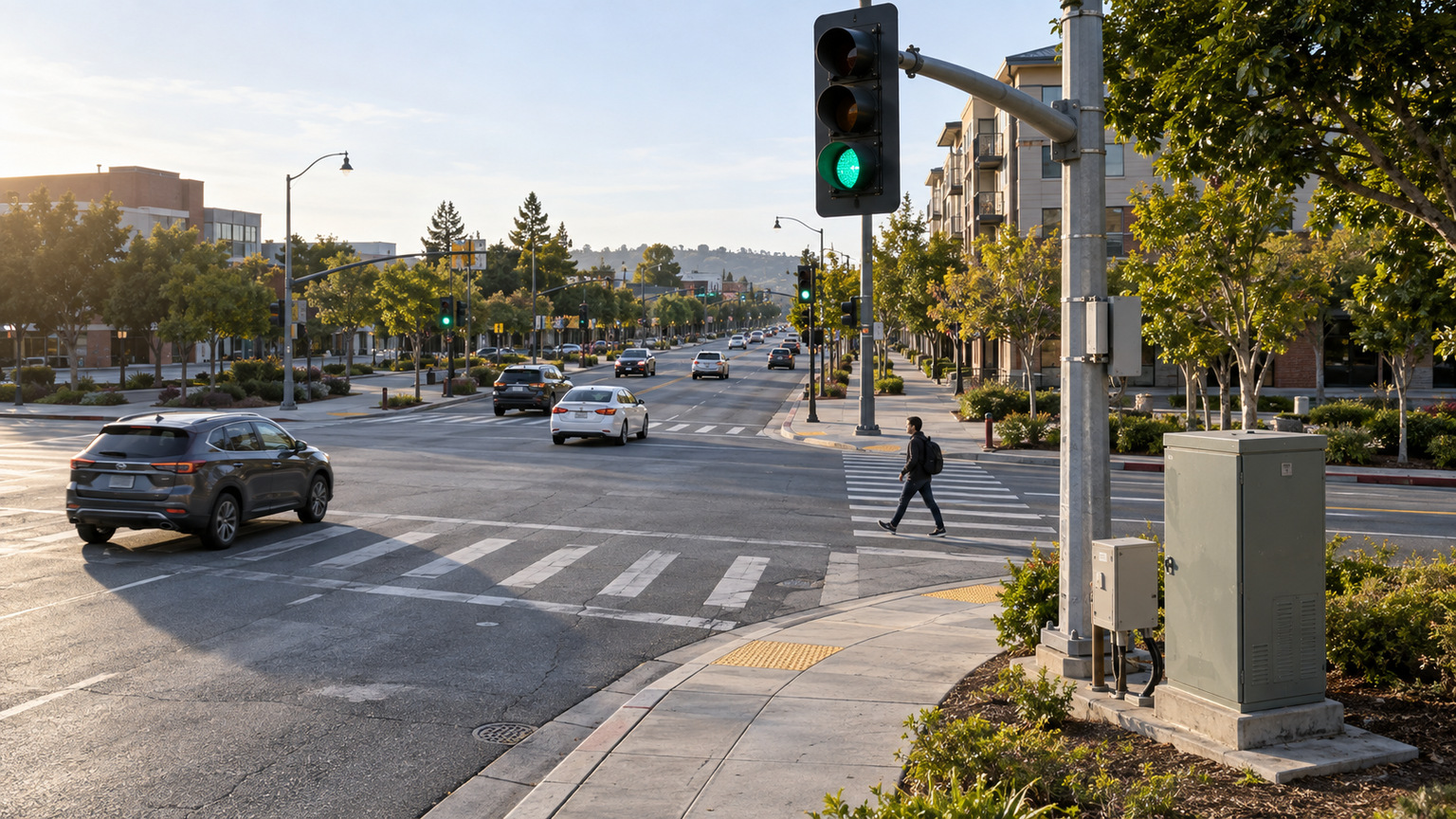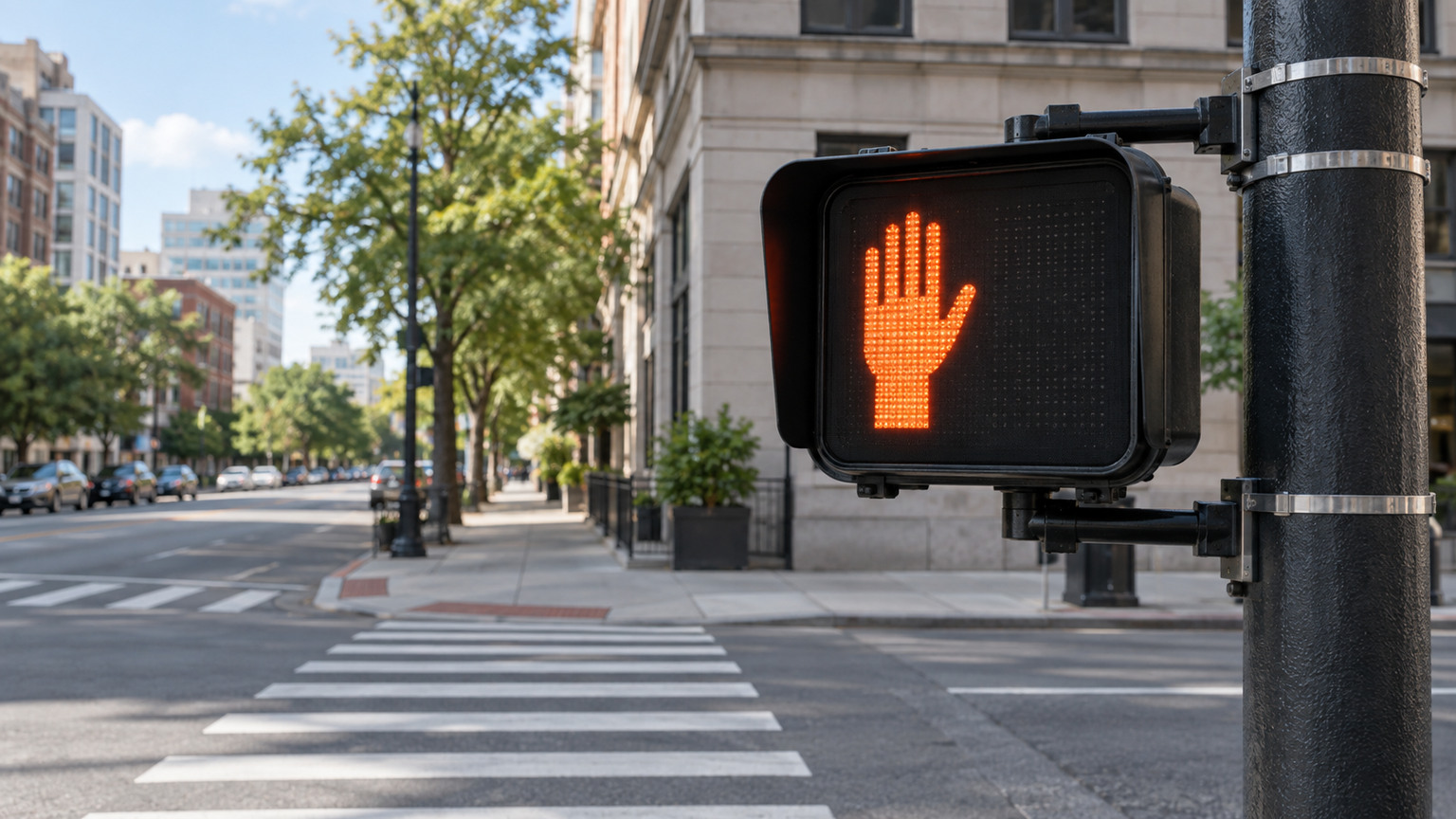

V2X traffic signal procurement in 2026 is moving from a discussion about connected-vehicle pilots to practical questions about what a signalized intersection can support, who owns the data and interfaces, and how the combined system will be accepted in the field. For a traffic signal buyer, the central distinction is between the LED indication that a person sees and the controller, communications, roadside equipment, and validated messages that a V2X application needs. A replacement signal module does not become a V2X device simply because the intersection is part of a connected-vehicle program.
What changed in 2026?
The U.S. Department of Transportation (USDOT) published a national V2X deployment plan in 2024 to encourage interoperable deployments. In its September 2026 update, USDOT reported operational readiness demonstrations at the Texas A&M Transportation Institute and the Utah Department of Transportation (UDOT). The demonstrations included emergency-vehicle preemption, red-light violation warnings, vulnerable-road-user applications, and, at the UDOT site, transit signal priority. These are demonstrations of particular configured systems, rather than evidence that every existing U.S. intersection is connected or that any standard LED signal module performs the communications function.
This distinction creates a useful industry trend for buyers: specifications increasingly have to describe both the visible signal hardware and the integration, data, testing, maintenance, and security responsibilities around it. Our phased signal replacement strategy discusses how to plan a wider renewal program; this article addresses the V2X-related interface and procurement questions within such a program.
Separate the signal module from the connected-intersection system
For a red-light violation warning use case, V2X may rely on signal phase and timing (SPaT) information and digital intersection geometry (MAP) data communicated to equipped vehicles. Transit signal priority introduces additional integration and operating rules. The displayed red, yellow, or green indication remains important, but a lamp cannot generate a trustworthy MAP file, configure a traffic controller, manage security credentials, or prove message accuracy.
| Layer | Question for the buyer | Typical evidence |
|---|---|---|
| LED indication | Does the exact module fit the approved signal face and electrical requirements? | Current model sheet, configuration, agency approval and acceptance criteria. |
| Controller and detection | Can the existing cabinet and controller provide the required data and approved operations? | Controller inventory, software and interface documentation, timing and detection plans. |
| V2X communications | Who supplies, integrates, secures and maintains the roadside equipment and messages? | System architecture, SPaT/MAP validation, credentials, field test and maintenance plan. |
| Agency acceptance | What will show that the full use case performs as approved after installation or a change? | Joint test record, configuration baseline, owner sign-off and change log. |
The distinction also applies to routine replacements at a connected intersection. If an LED module changes without changes to timing, detection, or communications, document that scope. If the project also changes the controller, detection, geometry, or priority logic, our detection and timing review explains why the team should treat that as a broader system change.
What recent deployments teach about readiness
A USDOT evaluation posted in May 2026 summarized UDOT’s transit signal priority deployment experience. Its lessons include test-driving the whole system before release, checking controller and hardware compatibility, validating MAP data in the field before and after geometry changes, and defining partner roles and performance measures in the contract. The underlying UDOT project report was published in 2024, so these are lessons drawn from an earlier deployment and summarized in 2026—not a claim that the project began in 2026.
Costs also depend heavily on the starting condition. A USDOT cost summary made public in February 2026, using an ITS America 2023 planning estimate, cited roughly $7,000–$15,000 per RSU-ready intersection for certain V2X deployment elements, excluding planning, engineering, procurement, and backhaul. It separately listed estimated cabinet/controller upgrades of $20,000–$25,000 for intersections that were not ready. These are historical planning estimates with different scopes, not current Frontier prices or a 2026 project quotation. The procurement lesson is to record cabinet and controller readiness before applying a per-intersection budget number.
A 2026 buyer checklist
- Define the use case. State whether the project is a red-light warning, emergency-vehicle preemption, transit priority, vulnerable-road-user warning, or another specific application. Different use cases require different approvals and tests.
- Inventory the existing intersection. Record signal faces and modules, controller and software, cabinet space and power, detection, communications, and the current drawing and timing baseline.
- Specify each deliverable by owner. Identify the LED indication, controller integration, roadside equipment, SPaT/MAP data, security, communications, training, maintenance and records separately.
- Validate in the field. Test the approved use case, message accuracy, controller behavior and signal display together. Repeat the affected checks after lane or geometry changes.
- Separate product approval from project funding rules. Verify the exact LED model under agency and product criteria; assess any domestic-content rule against the actual project and contract. Our module approval guide and BABA versus FHWA Buy America guide cover those separate questions.
Where Frontier belongs in the scope
Frontier by LEOTEK supplies LED signal modules for roadway, pedestrian, special-indication, and railroad applications. Buyers can evaluate an exact Frontier indication for the approved signal face, voltage, form factor, documentation and agency requirements. The public product portfolio should not be read as a claim that an LED module supplies a V2X roadside unit, generates SPaT/MAP messages, operates the controller, or receives a blanket connected-intersection approval. Those are separate system-level procurement and integration decisions.
Frequently asked questions
Does a V2X project require replacing every LED traffic signal module?
Not automatically. The agency should inspect the approved use case and the condition and compatibility of existing components. A V2X communications upgrade and an LED indication replacement have different scopes; either may be included in a larger renewal project.
What are SPaT and MAP in this context?
SPaT describes signal phase and timing information, while MAP describes digital intersection geometry used by connected applications. Their accuracy and the controller interface need field validation. An LED indication displays the approved signal to road users; it does not create these messages.
Does the 2024 national V2X plan make all U.S. intersections V2X-ready in 2026?
No. The plan is a framework to accelerate deployment. USDOT’s 2026 readiness demonstrations show configured applications at specific sites; they do not establish the equipment status of every intersection.
Can the USDOT cost summary serve as a 2026 bid price?
No. The cited amounts came from a 2023 planning estimate and exclude important categories. Cabinet/controller readiness, communications, security, local process and the chosen application can change project scope materially. Obtain current project-specific quotations.
Where should an LED module supplier be involved?
In the signal indication portion of the approved design: exact model, electrical interface, housing fit, optical and documentation requirements, and replacement acceptance. The agency and integration partners remain responsible for the connected-vehicle architecture and its field validation.
References
- U.S. Department of Transportation. (2024, August 16). USDOT releases national deployment plan for vehicle-to-everything technologies.
- U.S. Department of Transportation, ITS Joint Program Office. (2026, September). ITS JPO NOW: September 2026.
- U.S. Department of Transportation, ITS Deployment Evaluation. (2026, May 26). Verify overall system functionality and hardware compatibility prior to V2X transit signal priority deployment.
- U.S. Department of Transportation, ITS Deployment Evaluation. (2026, February 26). A large community deployment of V2X technology at 1,700 signalized intersections was estimated to cost $25 million to $45 million (summarizing an ITS America 2023 estimate).
Editorial scope: This analysis describes public deployment evidence and buyer questions as of September 2026. It is not a product compatibility certification, a project quotation, or a substitute for the agency’s approved engineering documents.