
Passive vs active railroad crossing warnings is a useful distinction when a project team first scopes a highway-rail grade crossing. A passive crossing uses devices such as signs and pavement markings to identify the crossing; those devices do not change their indication when a train approaches. An active warning system adds devices that respond to rail traffic, such as flashing lights and, where provided, gates and bells. The distinction describes a traffic control arrangement, not a choice a light-module supplier can make from a photograph.
For Frontier customers, the practical question is whether an inquiry concerns a site-level change to warning controls or a component within an already approved active system. The former needs the responsible railroad, highway agency, and any applicable regulatory authority; the latter still needs the existing configuration and current controlled product documents.
What does a passive grade crossing tell a driver?
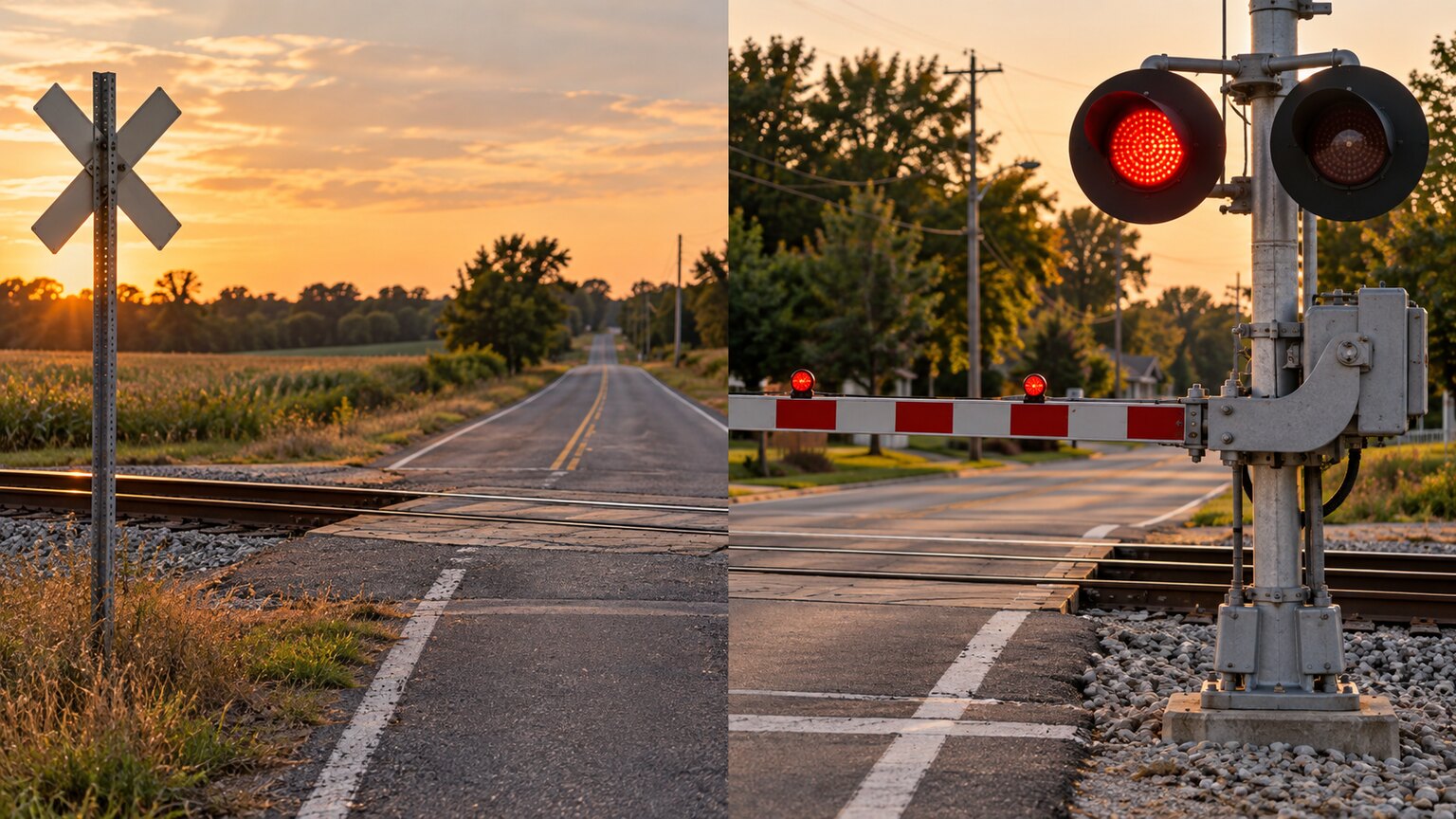
The Federal Railroad Administration describes passive devices as indicators that a crossing is present, leaving the road user responsible for looking for an approaching train and acting accordingly. Typical elements include a crossbuck, advance warning signs, pavement markings, and a YIELD or STOP control where applicable. A crossbuck can also remain part of an active crossing; seeing one does not prove the crossing is passive.
A passive installation does not use train-actuated flashing lights or gates to tell drivers that a train is approaching. The location, number of tracks, sight distances, roadway approaches, and applicable signs and markings still matter. A project team should document the actual field arrangement instead of treating “passive” as a complete equipment specification.
What changes at an active warning system?
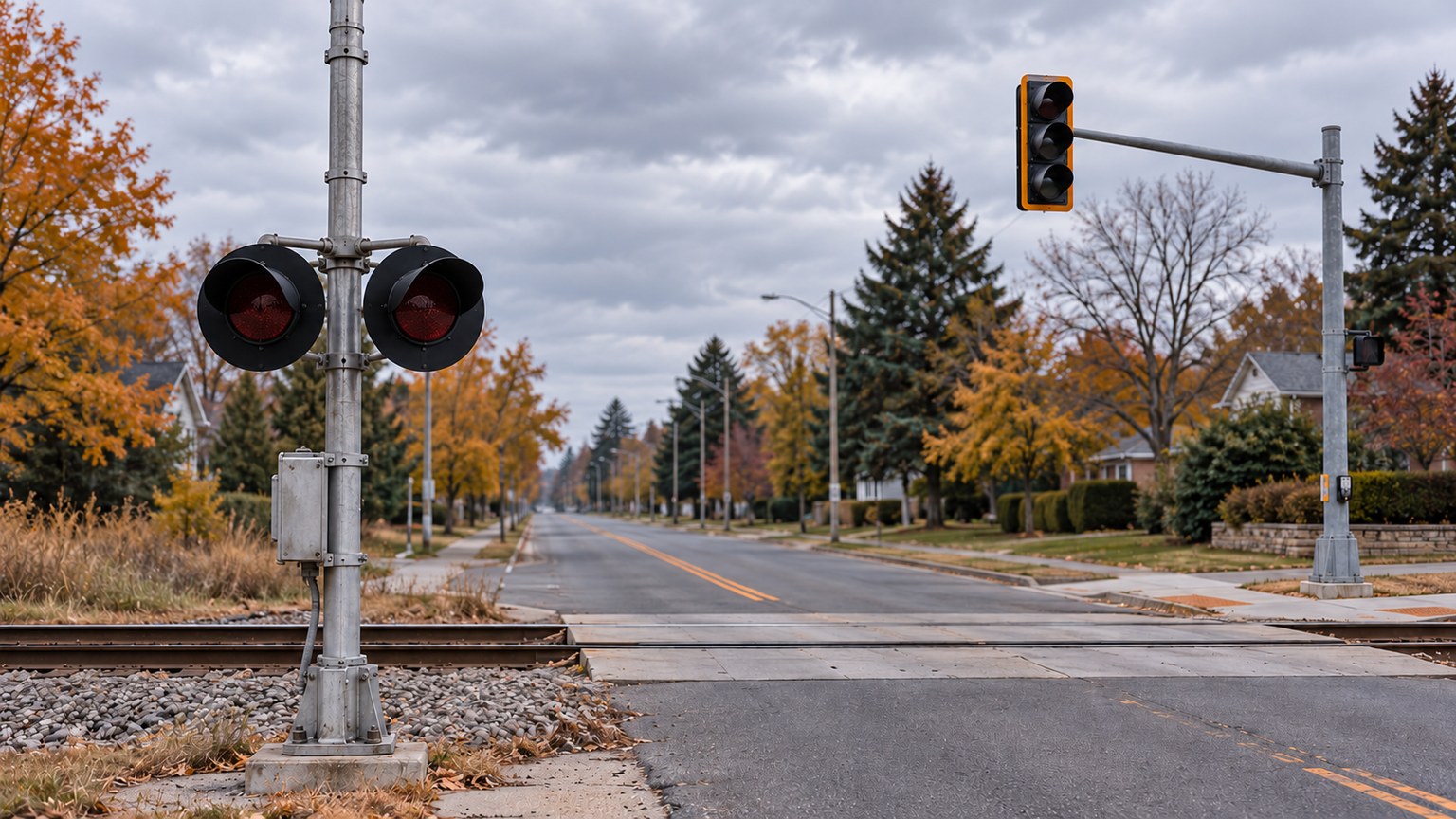
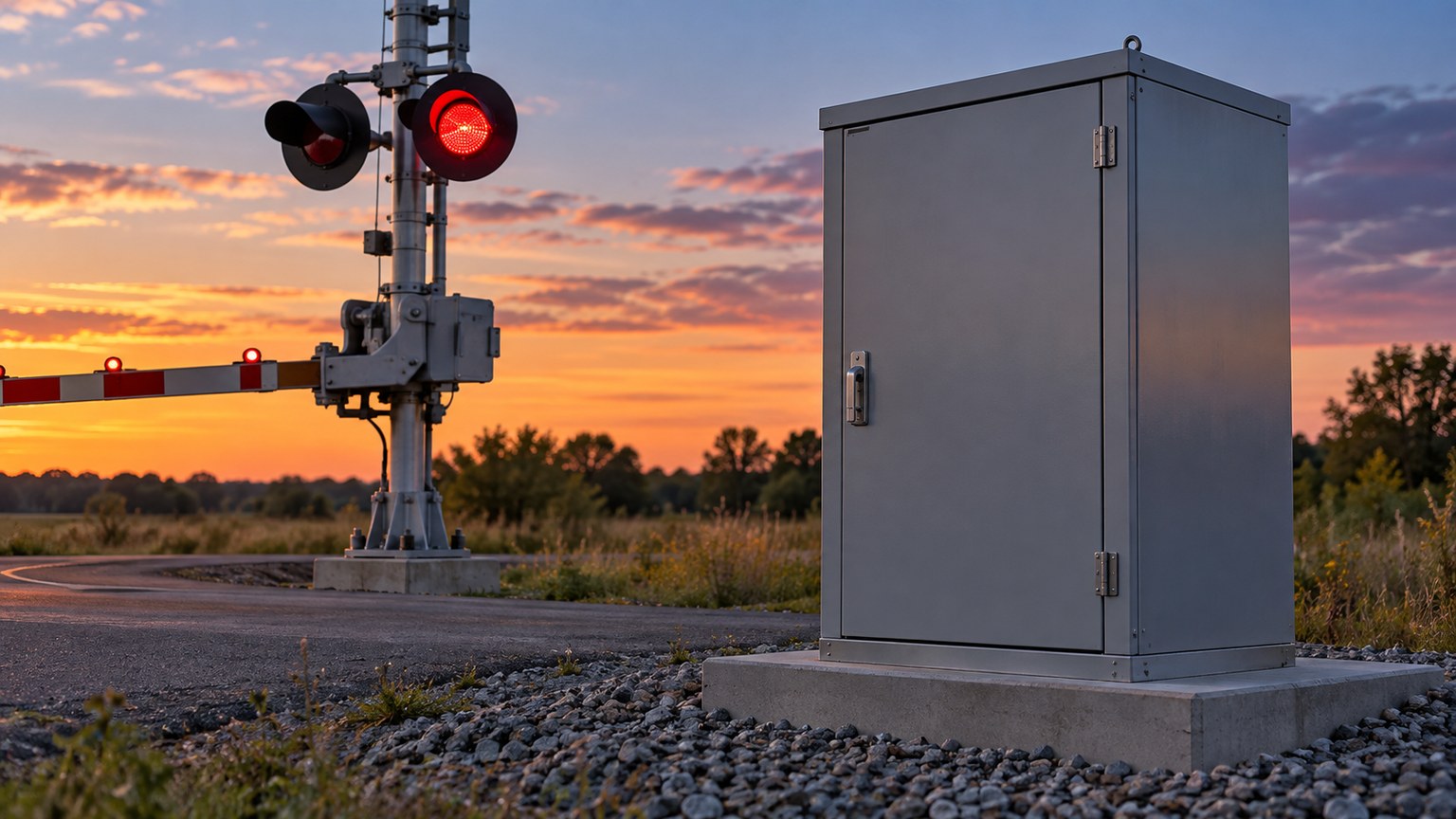
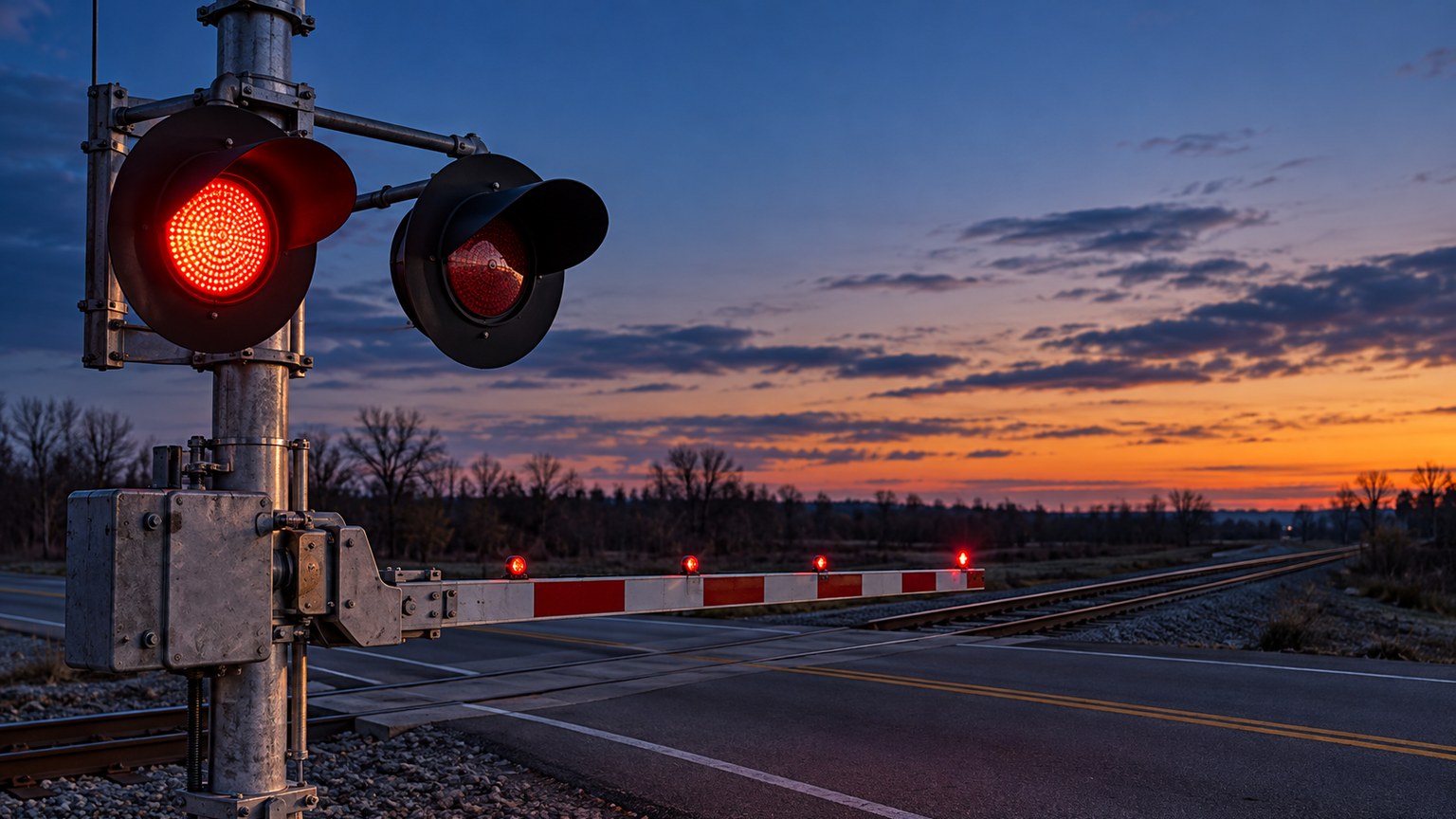
An active grade crossing has warning devices actuated in connection with approaching or present rail traffic. FRA lists flashing lights, gates, and bells among the devices that can be present, alongside passive signs and markings. The warning system includes more than the lamps visible from the road: train detection, control equipment, power, interconnections, and the agreed operating sequence are part of the overall arrangement.
The FRA/FHWA Highway-Rail Crossing Handbook explains that the advance warning and sequence must account for road users clearing the track area, and that nearby highway traffic signals may require coordination. Those are system and site design questions. Replacing a red LED lamp module does not by itself convert a passive crossing into an active one, add a gate, or resolve a nearby intersection queue. The railroad crossing traffic signal preemption checklist addresses the separate coordination review for an adjacent signal.
Compare the scope before requesting equipment
| Question | Passive crossing | Active crossing |
|---|---|---|
| What warns the road user? | Static signs and markings identify the crossing and direct attention to rail traffic. | Train-responsive devices such as flashing lights, sometimes with gates and bells, supplement signs and markings. |
| Does the warning change when a train approaches? | The passive devices do not change their indication in response to a train. | The active warning system is designed to activate in connection with rail traffic under its approved operation. |
| Is an LED warning-light module relevant? | Not as a replacement for equipment that is not installed; a proposed conversion requires a broader approved project. | Possibly, if the existing or approved assembly calls for a compatible light unit and the railroad accepts the exact configuration. |
| Who decides the site arrangement? | The responsible parties use a crossing-specific engineering study and applicable approvals, not a supplier’s product selection alone. | |
This comparison is a scoping aid. It does not prescribe which device a particular crossing needs or imply that any passive crossing should be upgraded without a site-specific determination.
Who decides whether warning controls should change?
Part 8 of the current MUTCD, 11th Edition with Revision 1, addresses traffic control at railroad and light rail grade crossings. It calls for an engineering study by a Diagnostic Team to determine the appropriate grade crossing traffic control system; the team includes the highway agency with jurisdiction, the railroad or transit agency, and the regulatory agency with statutory authority where applicable. New installations and modifications require the relevant approvals under Part 8. Local requirements and the approved design also govern implementation.
The study considers the actual approaches and operations: road geometry, sight and stopping distances, train and road traffic, nearby intersections and queues, pedestrian and bicycle use, multiple tracks, and crash history, among other factors. There is no universal rule that a product family or one photograph can substitute for this process.
Where does Frontier enter the discussion?
Frontier’s railroad signal product category includes rail-crossing lights with sidelight in Low Power and High Power families. These are component inquiries within a defined active warning application. Their names do not establish interchangeability, output, approval, or suitability at a specific crossing without current model-level data and the railroad’s review.
For an existing active installation, share the crossing inventory identification, existing equipment make and ordering code, controlled drawing and electrical interface, applicable optical requirements, and who will approve the change. If the concern is poor approach visibility, start with our flashing-light visibility field review. For a broader funded replacement program, use our rail-crossing warning-light procurement article to structure the project handoff. Contact Frontier with the approved application and current documentation to discuss available configurations.
Frequently asked questions
Does a crossbuck mean the crossing is passive?
No. Crossbucks can appear at both passive and active crossings. Look at the full installed arrangement and the approved crossing record.
Are flashing lights always accompanied by gates?
No. Active warning arrangements can differ by crossing. The responsible team determines the device combination through the applicable engineering and approval process.
Can a supplier recommend adding lights to a passive crossing?
A supplier can provide product information for an authorized project. The decision to change the crossing’s traffic control system belongs to the responsible railroad and agencies following a site-specific study and approvals.
Does an LED module determine warning time?
No. Warning time depends on the approved system design, detection, controls, and operation. A light module is one component of that system.
What should a buyer send for an active crossing replacement inquiry?
Provide the crossing identification, current assembly and module details, approved drawings, electrical and optical requirements, and the approval path. Request current controlled documents for the exact proposed configuration.
References
- Federal Highway Administration. (2025). Manual on Uniform Traffic Control Devices, 11th Edition with Revision 1, Part 8.
- Federal Railroad Administration. (2019). Highway-Rail Crossing Handbook, 3rd ed.
- Federal Railroad Administration. (n.d.). Highway-Rail Grade Crossings Overview.