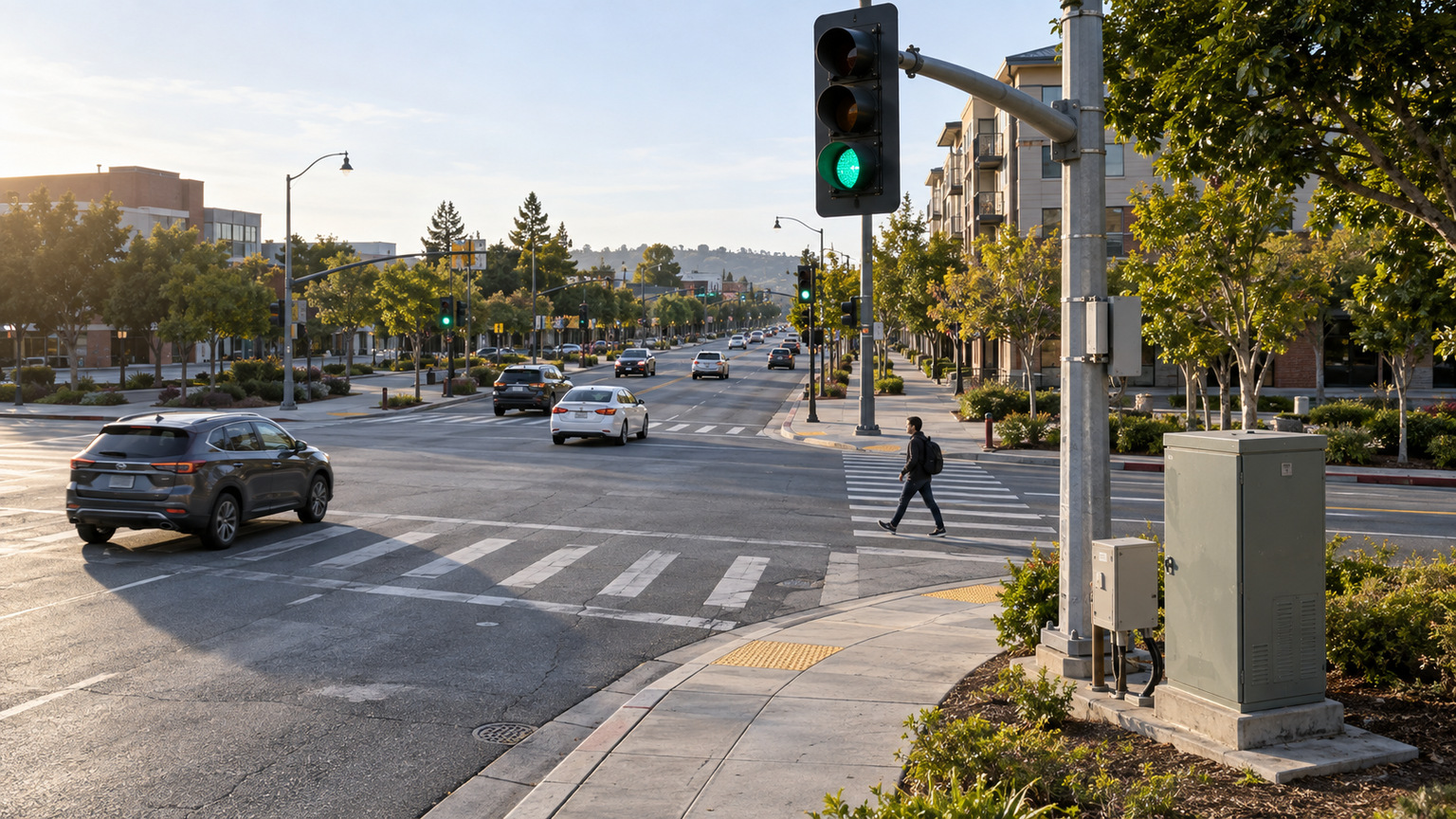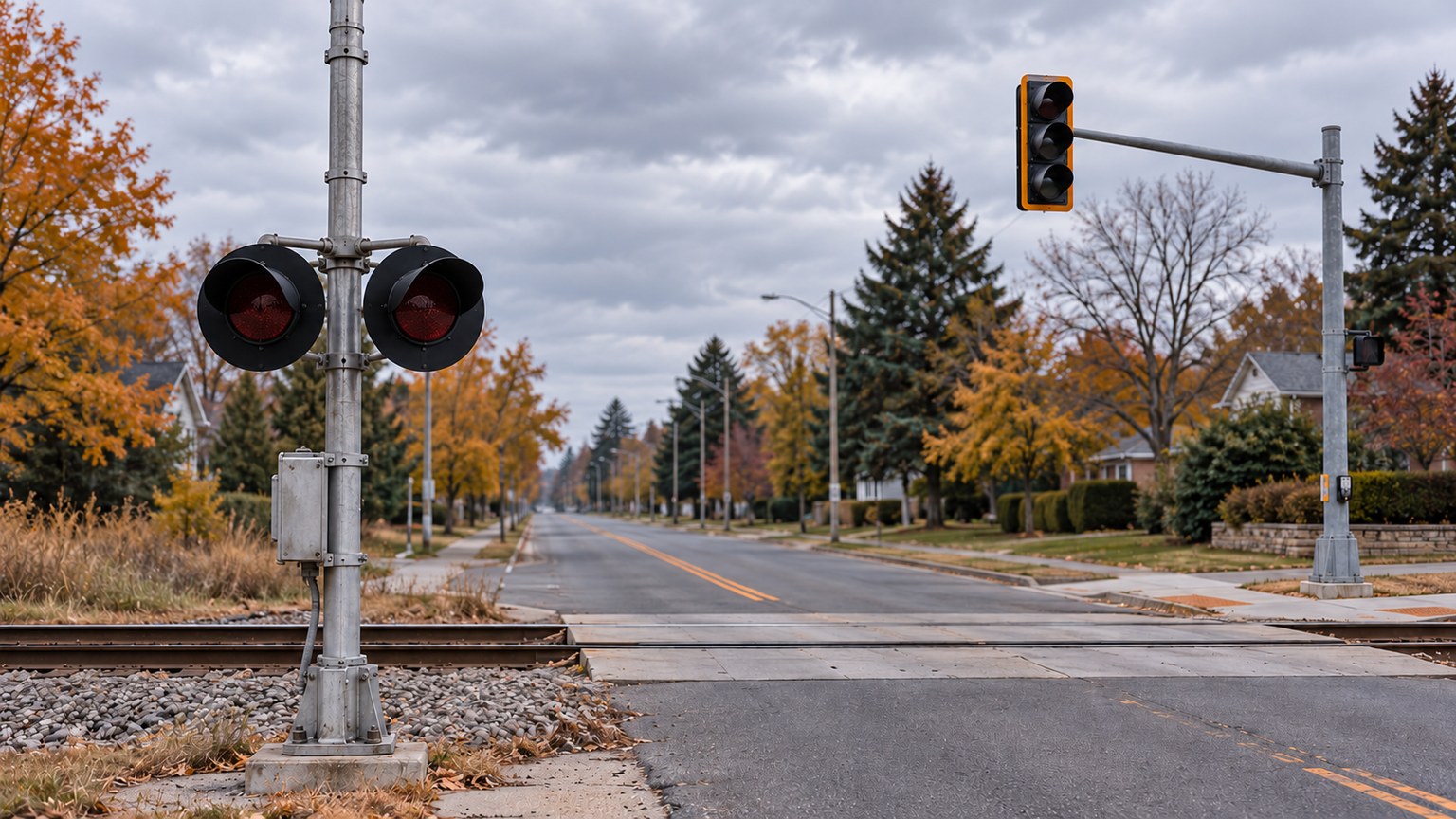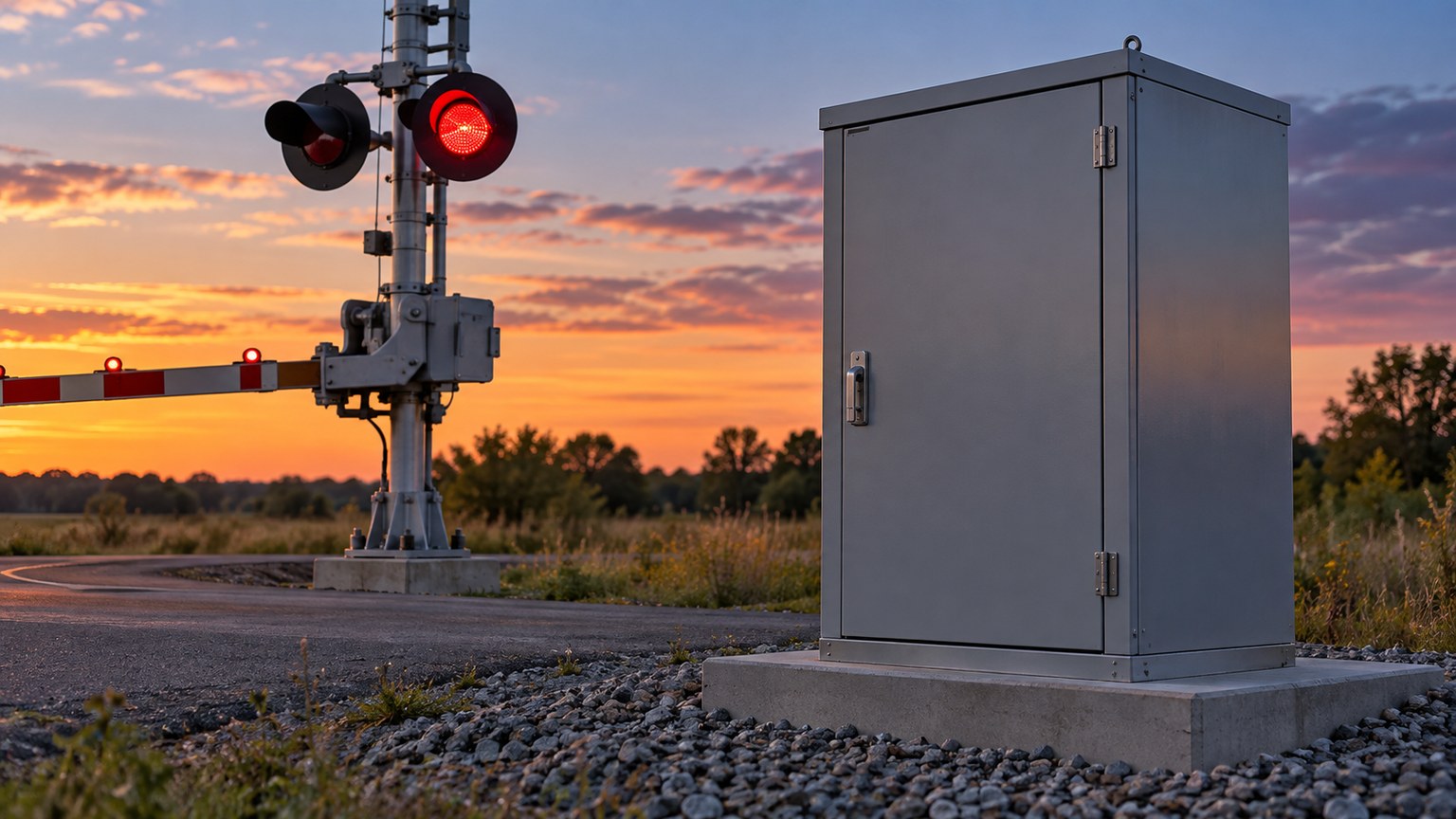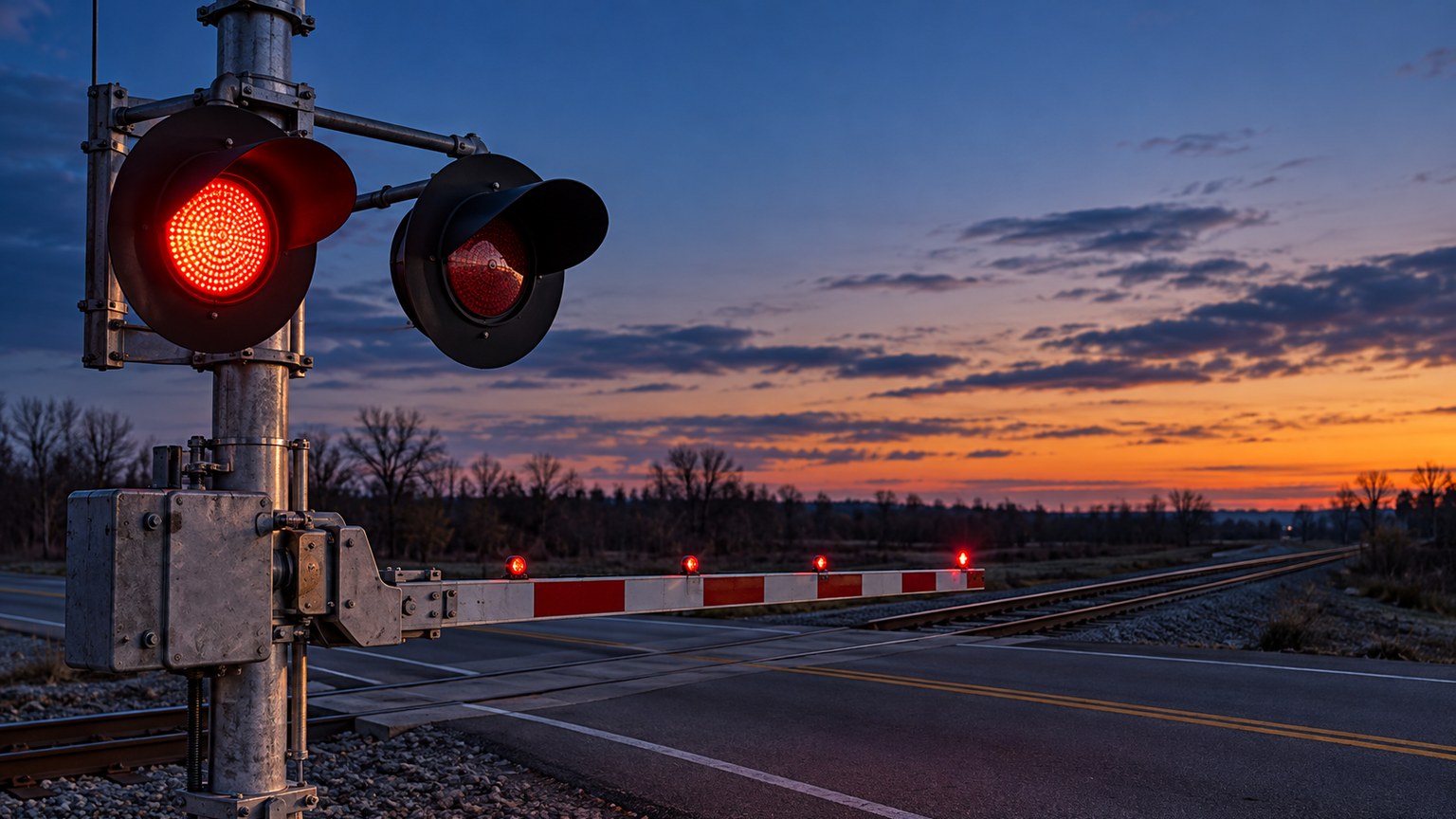


Rail crossing flashing light visibility is a question about the whole roadside warning arrangement. A light can be powered and still fail to communicate clearly to an approaching driver if it is aimed poorly, partly hidden, dirty, or viewed from an approach the arrangement did not adequately address. Reviewing the light from the roadway approach, rather than judging it only beside the mast, helps the responsible team identify what needs an engineering or maintenance response.
This article is a planning guide for railroad signal teams, crossing owners, agencies, consultants, and equipment buyers. It does not replace a railroad’s field procedures or authorize work on an active warning system. The applicable design, maintenance action, and testing belong to the responsible railroad and its qualified personnel.
The requirement is about what approaching road users can see
Under 49 CFR § 234.217, each flashing light unit must be positioned and aligned so that it is visible to a highway user approaching the crossing. The same section addresses protection from dust and moisture, the condition of roundels and reflectors, and alternating operation of the light units. Its flash-rate requirement is 35 to 65 flashes per minute for each unit. A replacement lamp or module cannot correct every visibility problem: the cause might involve the assembly’s orientation, a blocked sight line, contamination, or the crossing’s wider layout.
FHWA’s current MUTCD, 11th Edition with Revision 1, covers roadway traffic control at railroad and light rail grade crossings in Part 8. The roadway approach, placement of the flashing-light assembly, gates, signs, markings, and nearby traffic signals can all shape what a road user perceives. A product specification supports selection; it does not substitute for a site-specific crossing review.
What should a field review record?
Use a consistent observation record for each roadway approach and each relevant light unit. The record should identify the crossing and equipment, the direction of travel, the observation point, ambient conditions, and the condition observed. Photographs can help explain a concern, but do not replace the required inspection or testing.
| Observation | Question for the responsible team | Useful record |
|---|---|---|
| Approach visibility | Is the active warning distinguishable to an approaching road user along the relevant path of travel? | Approach direction, view photographs, time, weather, and any obstruction. |
| Aim and orientation | Does each unit face the intended traffic approach as required by the approved installation? | Unit position, mounting condition, drawing reference, and inspection result. |
| Optical condition | Are the visible surfaces clean and undamaged? Is moisture or contamination affecting the unit? | Condition photos and maintenance work order. |
| Alternating operation | Are the red light units operating in the approved sequence and within the applicable requirement? | Test result recorded by the qualified railroad team. |
| Changing surroundings | Have vegetation, signs, utility work, road geometry, or adjacent development changed sight lines? | Location-specific notes for engineering review. |
| Crossing context | Do gates, signs, nearby road signals, and different turning approaches warrant a broader review? | Crossing diagram and follow-up assignment. |
The purpose of this table is to make a concern specific enough to investigate. It is not a substitute checklist for compliance, an installation instruction, or a claim that all listed actions are federally prescribed at the stated frequency.
Separate recurring inspections from a new product inquiry
49 CFR § 234.253 sets different inspection intervals for different checks. It calls for inspection of alignment and flash frequency when installed and at least every 12 months; testing lamp voltage when installed and at least every 12 months; and inspection for visibility, dirt, and damage to roundels and reflectors at least monthly. These are railroad warning-system obligations. A manufacturer article should help a buyer collect the right information while leaving testing and compliance decisions with the railroad.
When a team identifies a concern, record whether it involves a failed component, the mechanical assembly, obstruction on the approach, or an approved-design question. 49 CFR § 234.207 addresses prompt determination and correction when an essential component fails. The railroad also has separate response obligations for activation, partial-activation, and false-activation failures. A purchase order should follow the responsible team’s diagnosis, not stand in for it.
Where do LED module selection and sidelights fit?
Frontier lists Low Power and High Power rail crossing lights with an integrated sidelight. A sidelight is a feature to consider when documenting lateral viewing conditions, but its presence does not prove that a particular installation meets the visibility needs of every traffic approach. The approved crossing design, current controlled product document, system interface, and responsible agency’s acceptance determine whether a proposed unit is appropriate.
Do not infer a universal application from the words Low Power or High Power. Without the relevant approved photometric requirement and current model-level data, comparing the names alone cannot establish a substitution. For the published family attributes and missing model-level data, see the Low Power versus High Power rail crossing light comparison. If the observation points toward a broader layout or approach problem, the solution may require an engineering review beyond the light unit.
Turn an observation into a useful handoff
For a maintenance or procurement inquiry, identify the crossing, roadway approach, existing unit and ordering code, approved drawings, symptoms, inspection records, and the authority who will evaluate the proposed action. Then distinguish the requested scope: cleaning or adjustment, replacement of a specific component, or reconsideration of a wider crossing layout. The work and any resulting testing must follow the responsible railroad’s requirements.
Teams deciding whether a site uses passive signs or a train-actuated warning system can review our passive-versus-active crossing guide. Buyers planning a funded program can first read our rail-crossing warning-light procurement article for budget and project handoffs. For a product-specific inquiry, contact Frontier with the existing configuration and the applicable design documentation so the team can identify relevant current product documents.
Frequently asked questions
Is a flashing LED light automatically visible enough for the roadway approach?
No. Visibility depends on the installed unit’s position and aim, optical condition, obstructions, and the site-specific roadway approach. The responsible team must assess the approved arrangement and its field condition.
Does the FRA require every visibility check at the same interval?
No. Section 234.253 differentiates inspection of visibility, dirt, and damage at least monthly from checks of alignment and flash frequency when installed and at least every 12 months. Lamp voltage has its own installation and 12-month test requirement.
Can a sidelight solve a blocked forward view?
The sidelight adds a viewing feature, but a blocked or poorly aimed approach view needs site-specific investigation. Do not treat the feature as proof that a crossing design or installation is acceptable.
Should a supplier recommend Low Power or High Power from a photograph?
A photograph alone is insufficient. The buyer should share the existing ordering code, approved design and optical requirements, electrical interface, and approval path before selecting a configuration.
What should happen when a warning light appears to have failed?
Report the concern through the railroad’s established channel and follow its procedures. The railroad determines the cause, the applicable failure classification and interim measures, and the correction and verification required under Part 234.
References
- Federal Highway Administration. (2025). Manual on Uniform Traffic Control Devices, 11th Edition with Revision 1.
- Electronic Code of Federal Regulations. (2026). 49 CFR § 234.217, Flashing light units; § 234.253, Flashing light units and lamp voltage; § 234.207, Adjustment, repair, or replacement of component.