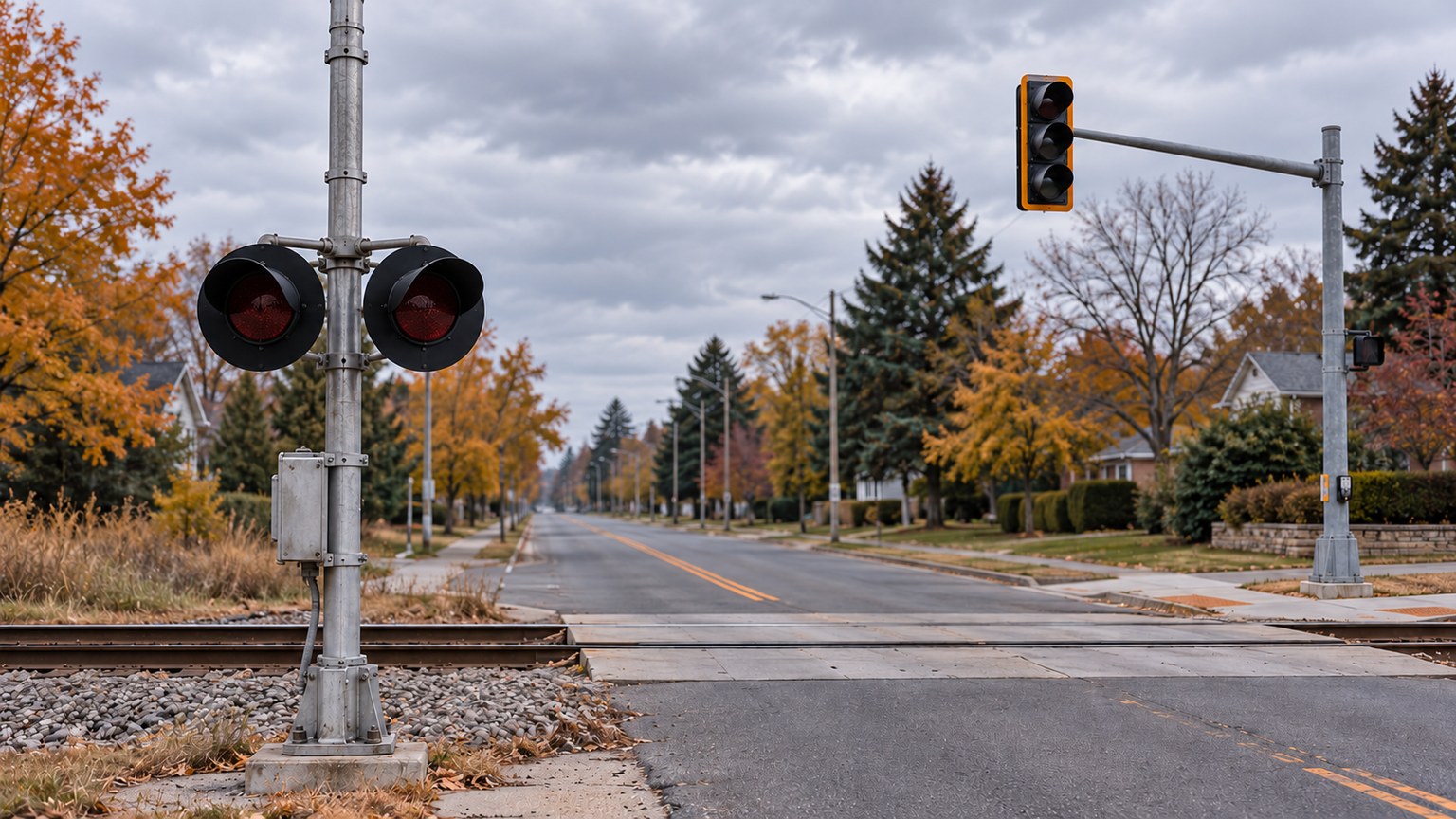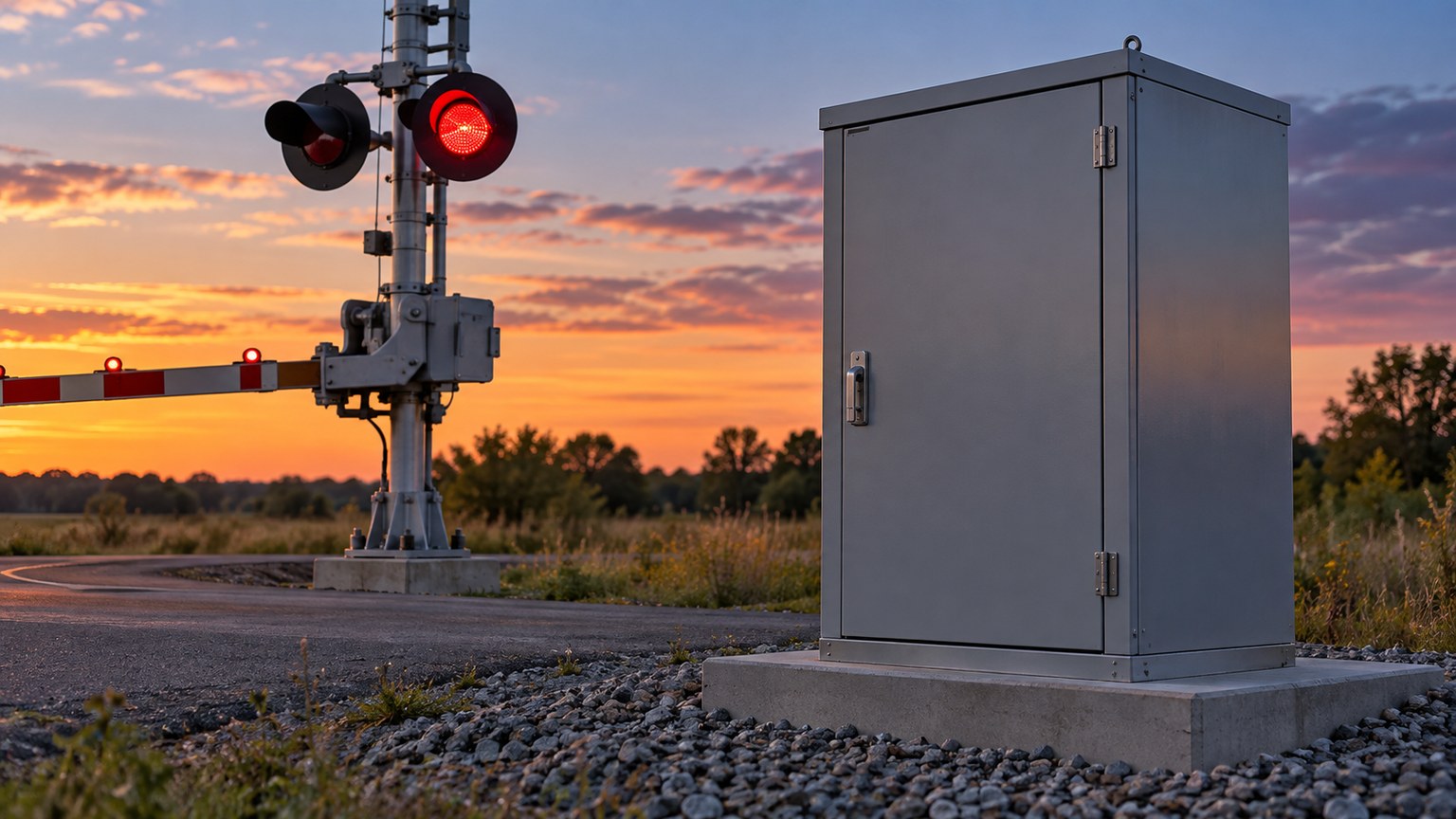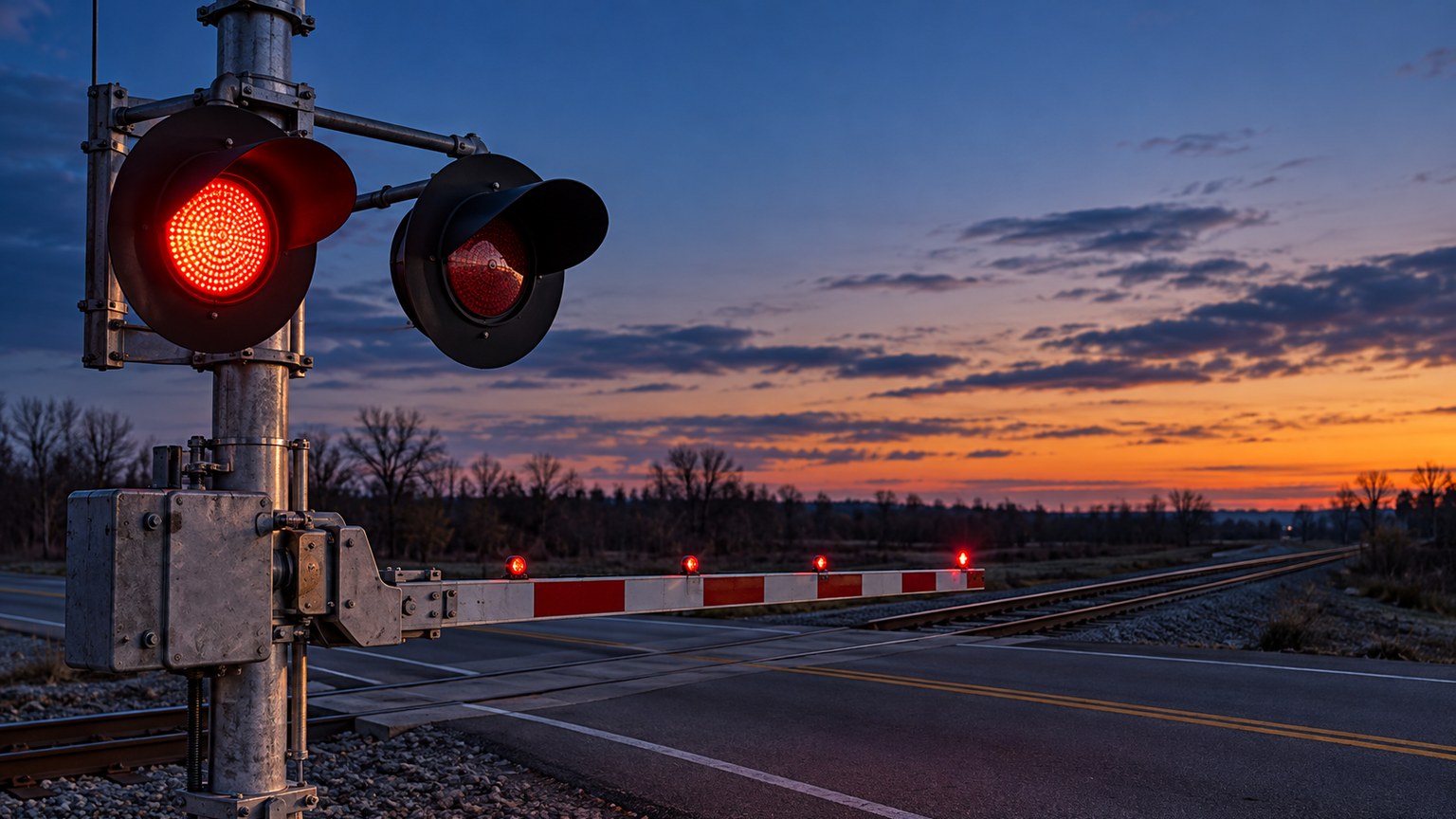

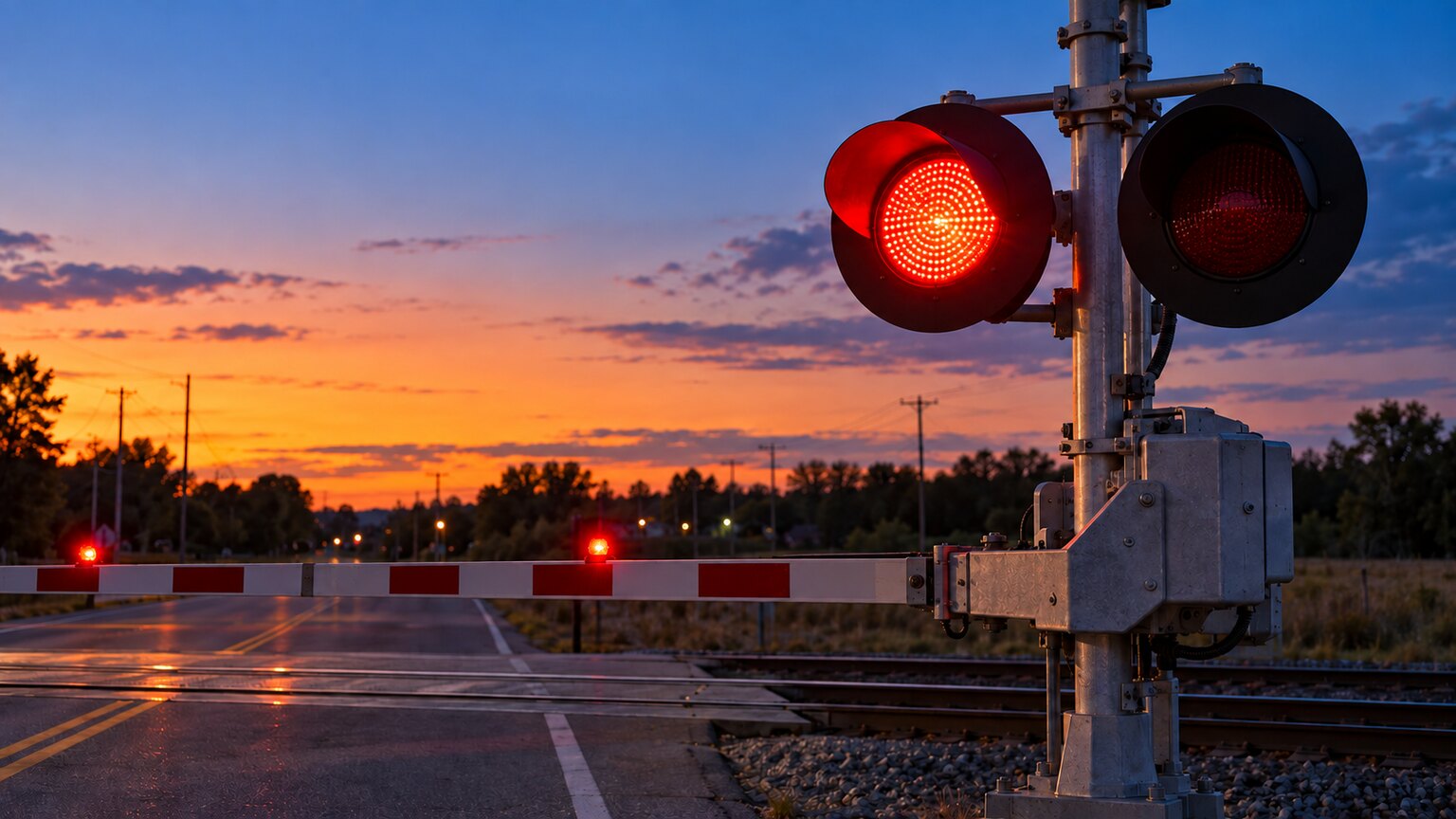
Low Power vs. High Power rail crossing lights sounds like a simple brightness choice. For a railroad signal buyer, the useful comparison is more specific: which approved photometric requirement, electrical interface, and existing assembly must the exact light unit satisfy? Frontier lists both versions in its 433 rail-crossing family. Their public pages describe a lower-output and a higher-output option, but do not publish the model-level intensity curves or input-power values needed to certify a substitution from a family name alone.
This guide separates the information already available on Frontier’s product pages from the documents an engineer or railroad purchasing team should request. It addresses selection within an approved active crossing-light application. A change to the crossing warning system itself belongs to the responsible railroad and agencies.
What the two published product pages actually have in common
The Low Power product page and High Power product page both identify a Frontier 433 rail-crossing light with a 12-inch red tinted lens, an integrated sidelight, a listed 12Vac/Vdc input, and O-ring terminals. Those shared labels establish the family and basic interface described online. They do not establish the exact ordering-code configuration, approved optical pattern, mounting fit, or equivalent replacement status for a particular crossing.
| Decision field | Low Power, as published | High Power, as published | What to verify for the project |
|---|---|---|---|
| Family and indication | Frontier 433; red rail crossing | Frontier 433; red rail crossing | Exact model and ordering code on the controlled drawing |
| Lens and sidelight | 12-inch tinted lens; integrated sidelight | 12-inch tinted lens; integrated sidelight | Photometric distribution for the approved roadway approaches and the specified assembly |
| Published electrical label | 12Vac/Vdc | 12Vac/Vdc | Permitted input range, current or power by model, and compatibility with the installed circuit |
| Published terminal | O-ring | O-ring | Connector, fit, polarity or wiring, mounting, and installation instructions |
| Output positioning | Described as lower luminous intensity | Described as higher luminous intensity | Current test data, required intensity and viewing angles; do not infer a numeric ratio |
Source of the shared attributes and qualitative output descriptions: the two linked Frontier product pages, reviewed September 2026. This is a website comparison, not a current controlled specification or a compatibility approval.
Low Power does not mean low voltage
Both product pages list the same nominal 12Vac/Vdc input. “Power” in the family labels therefore should not be read as an instruction to change the crossing supply voltage. The public pages also do not supply the input-current and power figures needed to quantify energy or standby-battery effects. Ask for the exact model’s current controlled electrical data before estimating load, reserve capacity, or operating cost. A lower-output designation by itself is not a battery calculation. The railroad crossing standby power guide explains which system loads, plans, and tests belong in that review.
The FRA/FHWA Highway-Rail Crossing Handbook describes an active warning system as including detection and control equipment as well as its visible devices. A lamp-unit change must be reviewed within the installed system, not treated as an isolated wattage purchase.
Higher output is not an automatic upgrade
The High Power page positions its output above Low Power, and the Low Power page describes a reduced-intensity application. Neither family label states the luminous intensity at each required angle on the current exact model. A brighter-sounding name cannot establish that the assembly is aimed correctly, visible along all intended approaches, or suitable for a specific roadway geometry. Likewise, it does not prove that Low Power is inadequate at every crossing or that High Power is an approved direct replacement.
49 CFR § 234.217 addresses positioning and alignment so a flashing-light unit is visible to approaching highway users, among other unit requirements. The responsible railroad applies its approved design, installation, inspection, and acceptance procedures. For a field concern about aim, obstruction, or optical condition, use our flashing-light visibility review before assuming a different output option is the remedy. When a warning-system malfunction is reported, the malfunction response and repair handoff guide explains the separate railroad-led response before a replacement choice.
Five documents or answers to collect before comparing models
- Existing equipment identity. Record the crossing inventory identification, assembly, manufacturer, full ordering code, revision, and the location of the specific lamp being reviewed.
- Approved optical requirement. Obtain the crossing drawing or specification and the current angular intensity and color data for the proposed exact model. A single brightness adjective is not a photometric comparison.
- Electrical and control interface. Confirm the approved supply and operating range, model-level current or power, circuit compatibility, and any monitoring behavior relevant to the installed system.
- Physical interface and installation. Match lens, mounting, terminal arrangement, wiring, sidelight orientation, environmental requirements, and current installation instructions against the installed assembly.
- Approval and test path. Identify who authorizes the change, what submittal documents are needed, and how the railroad will verify the installed result under its procedures.
The buyer can send this package to Frontier to request the current technical data for the proposed configuration. For program-level funding and purchasing handoffs, the separate rail-crossing procurement article covers that broader workflow. If the project would add active warnings to a passive crossing, start with the passive versus active crossing guide and the responsible agencies’ engineering process.
Frequently asked questions
Are Low Power and High Power both 12-volt products?
Both current public product pages list 12Vac/Vdc. Confirm the exact model’s allowable input range and interface in its controlled document before ordering.
Does High Power always provide a safer crossing?
No universal conclusion follows from the family name. The approved optical requirement, roadway approach, system design, installation, and railroad acceptance determine suitability; the public pages do not provide a site-specific safety finding.
Can High Power replace Low Power without changing anything else?
Do not assume a direct substitution. Compare the exact ordering codes, optical data, electrical load, physical fit, and the railroad’s approval and verification requirements.
Does the integrated sidelight make the two models interchangeable?
No. Both pages list a sidelight, but the exact optical and electrical configuration and approved installation still need review. It is a shared feature, not proof of interchangeability.
Where can I find a candela or wattage comparison?
The two public pages reviewed for this article do not present model-level comparison values. Request current controlled photometric and electrical documentation from Frontier for each proposed ordering code.
References
- Frontier. (n.d.-a). Frontier rail crossing light with sidelight, High Power. Retrieved September 26, 2026.
- Frontier. (n.d.-b). Frontier rail crossing light with sidelight, Low Power. Retrieved September 26, 2026.
- Ogden, B. D., & Cooper, C. (2019). Highway-rail crossing handbook (3rd ed.). Federal Railroad Administration & Federal Highway Administration.
- Electronic Code of Federal Regulations. (2026). 49 CFR § 234.217, Flashing light units.